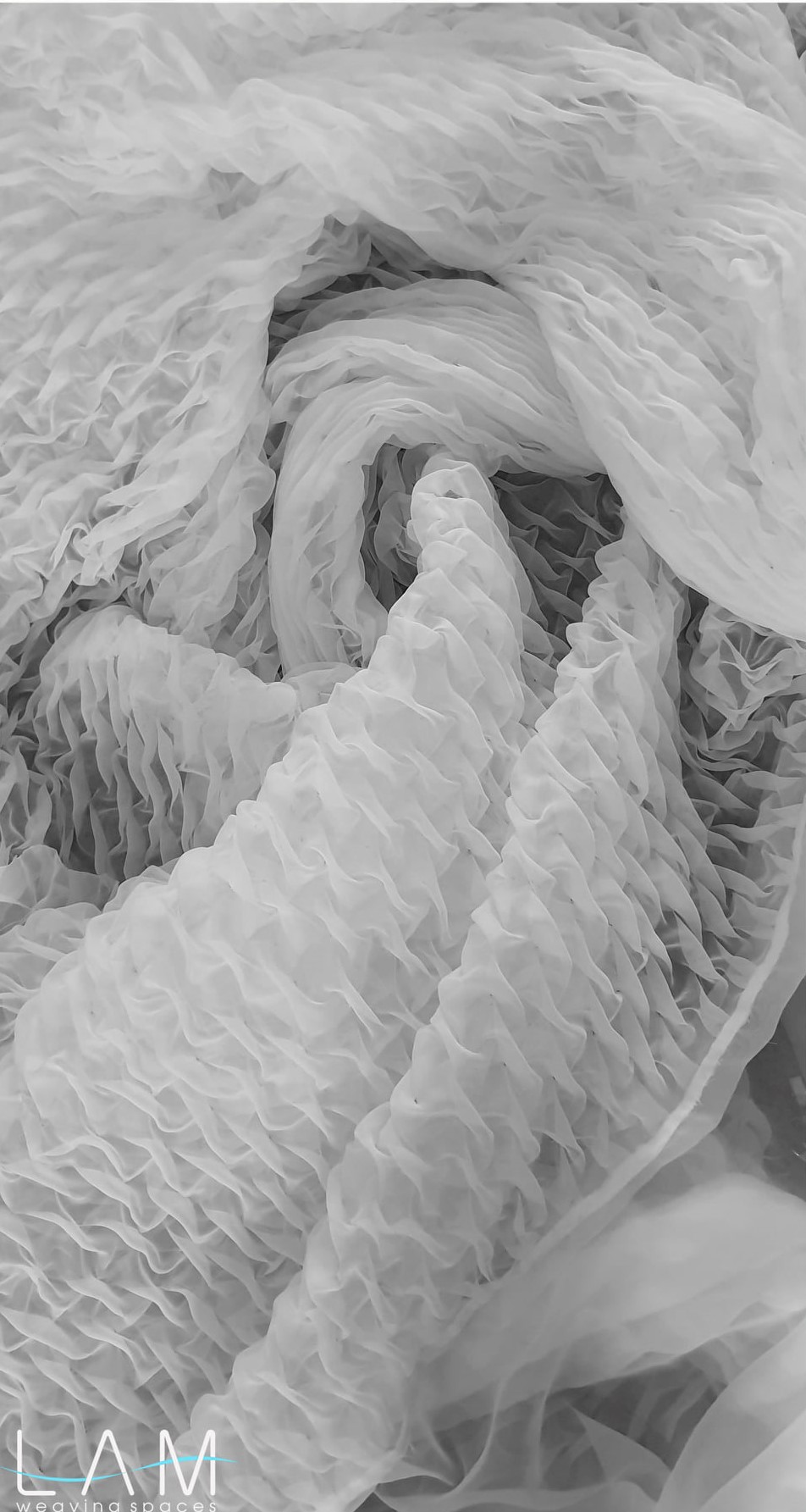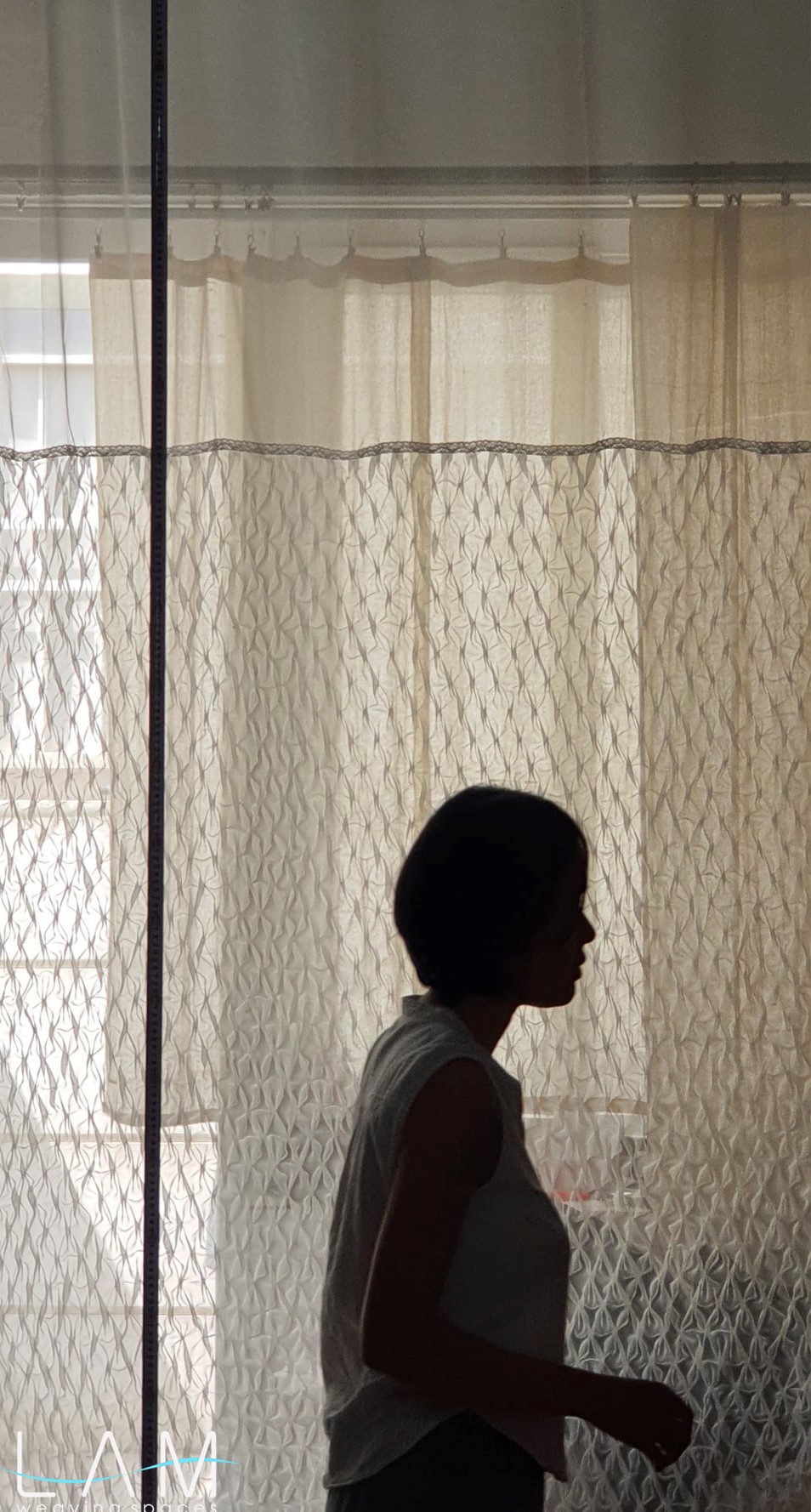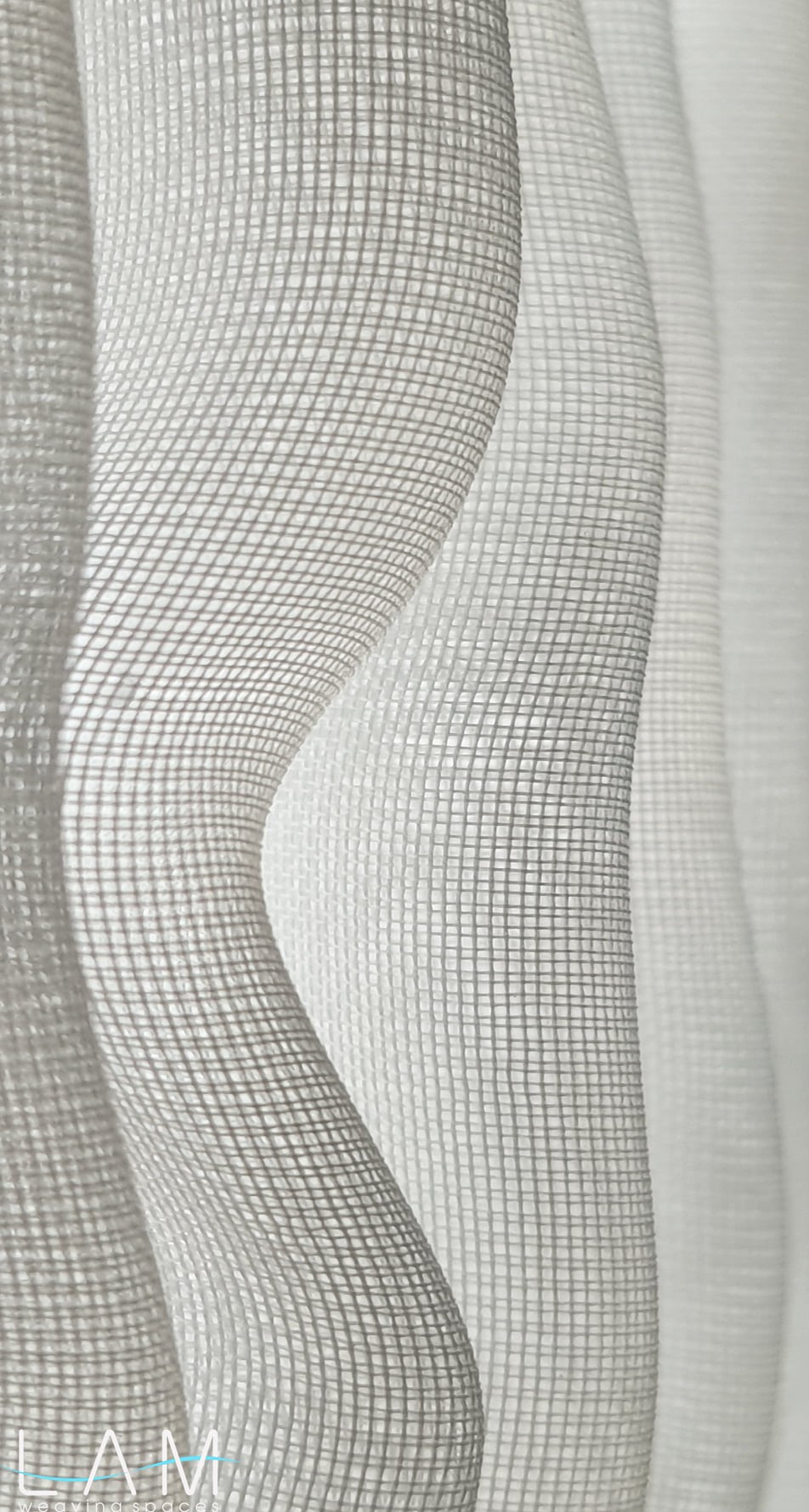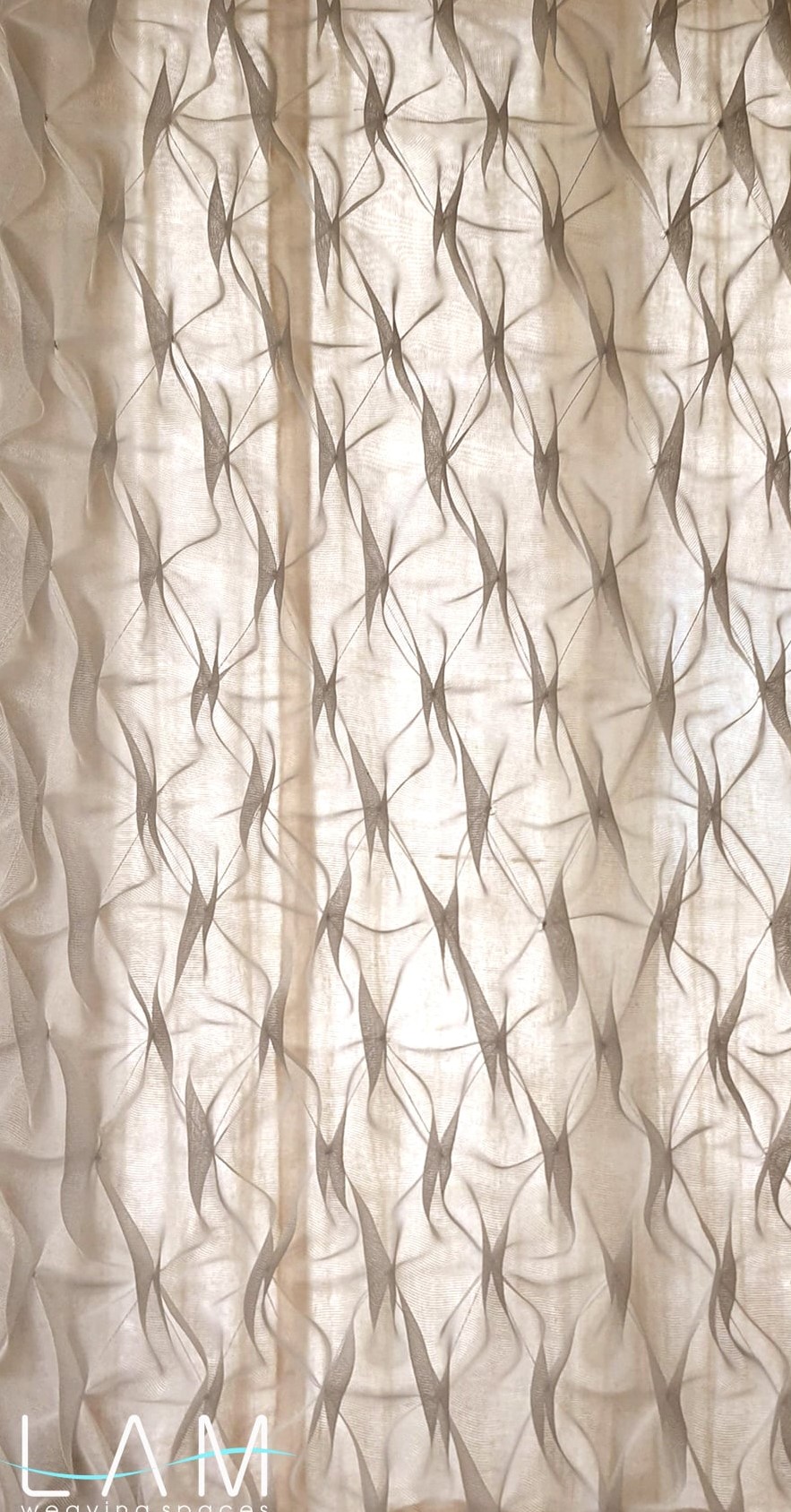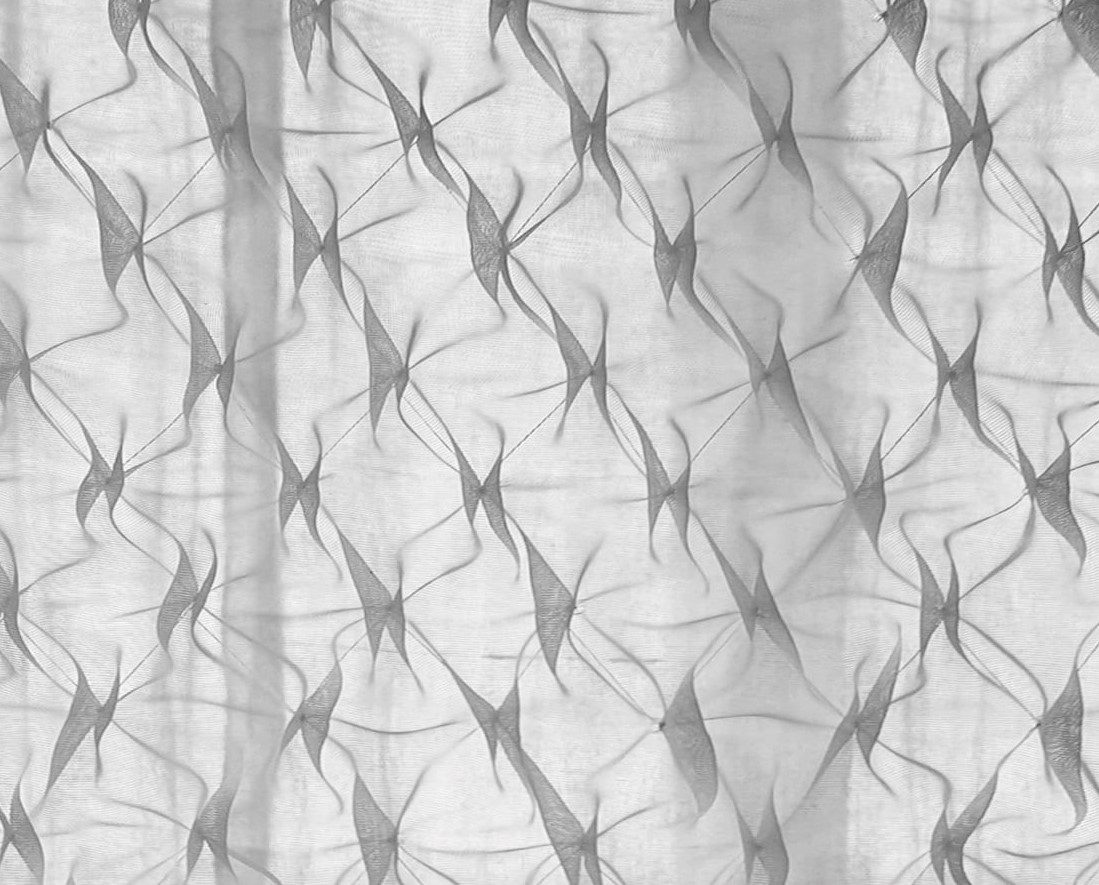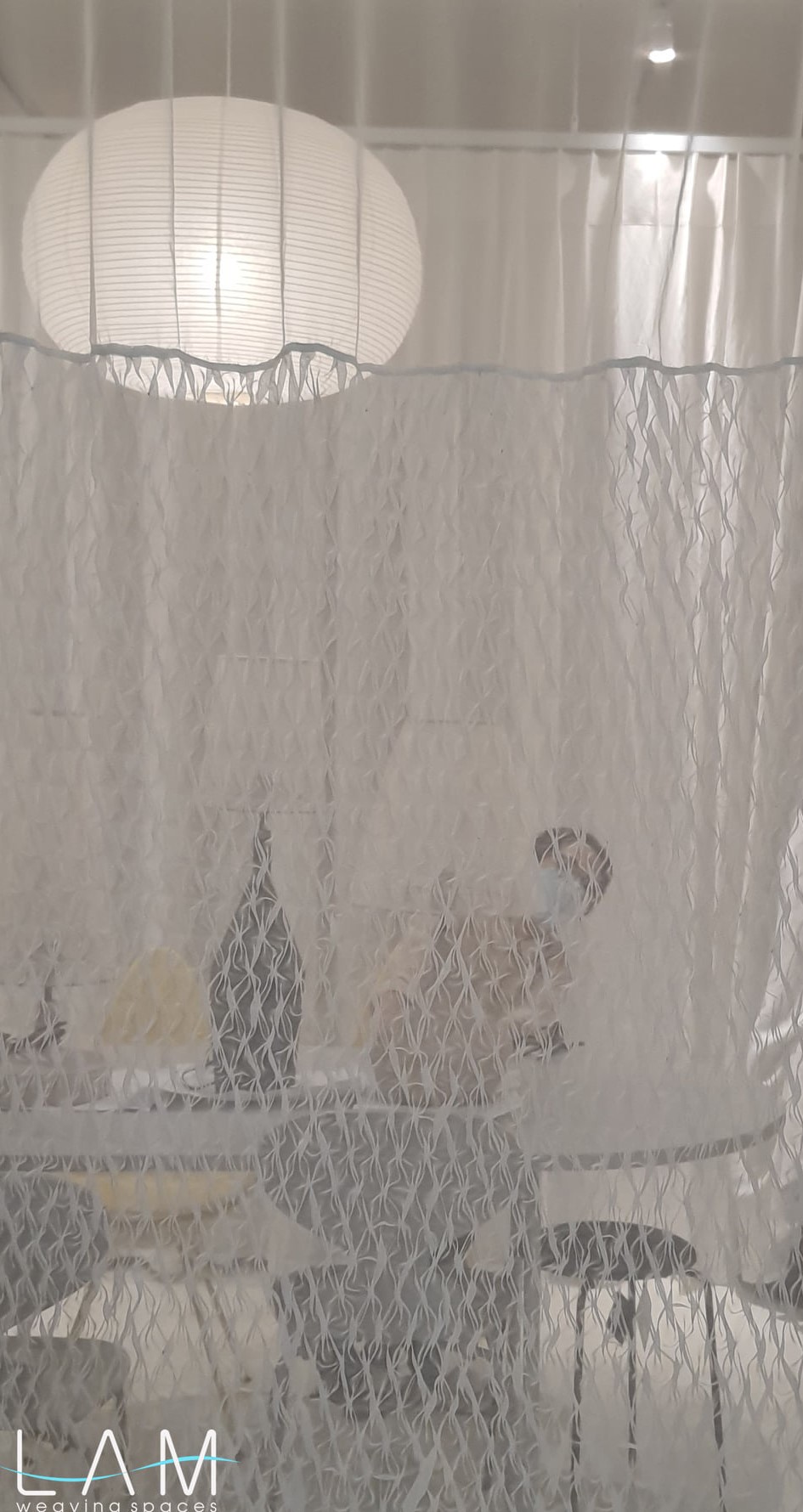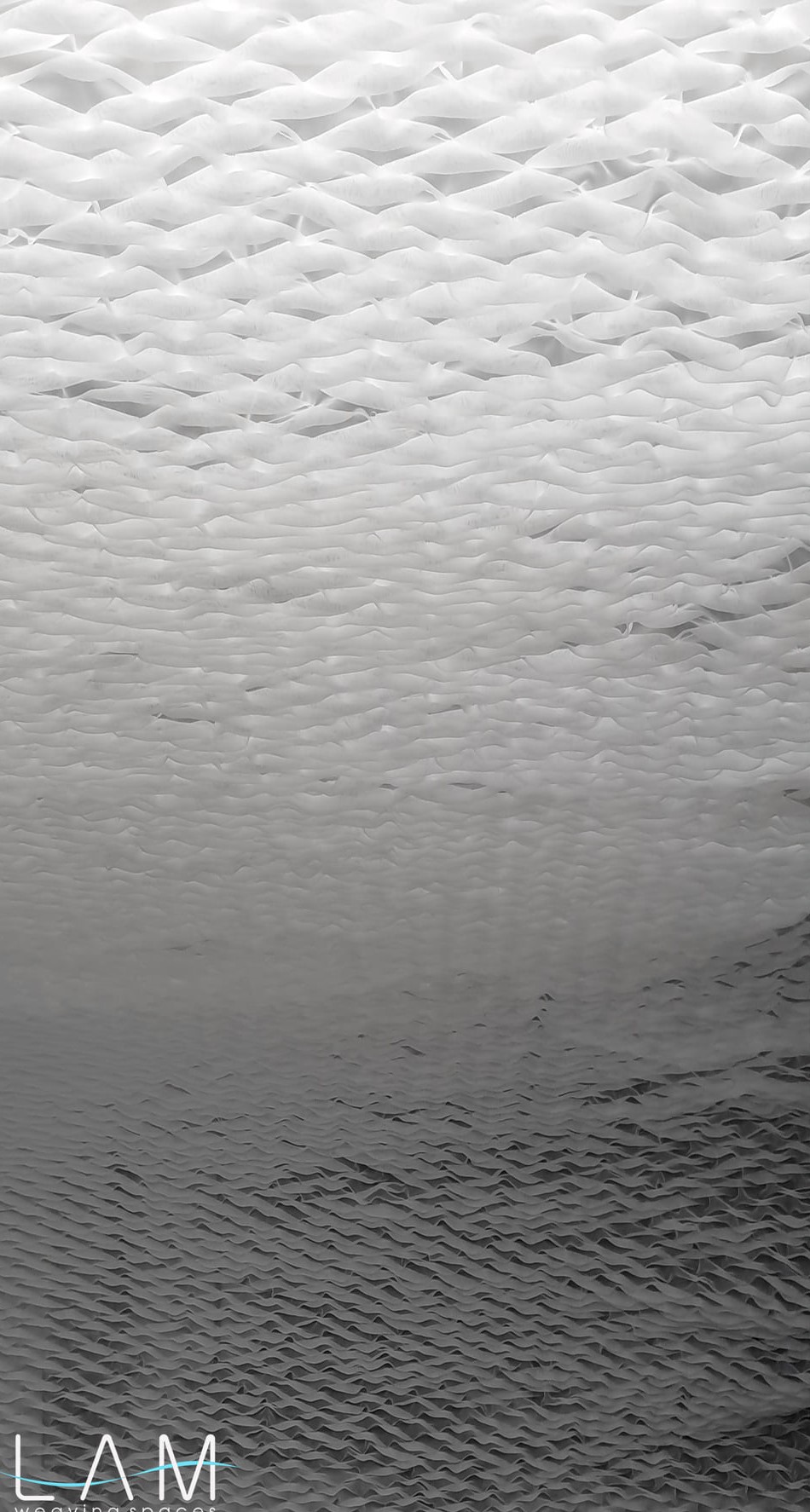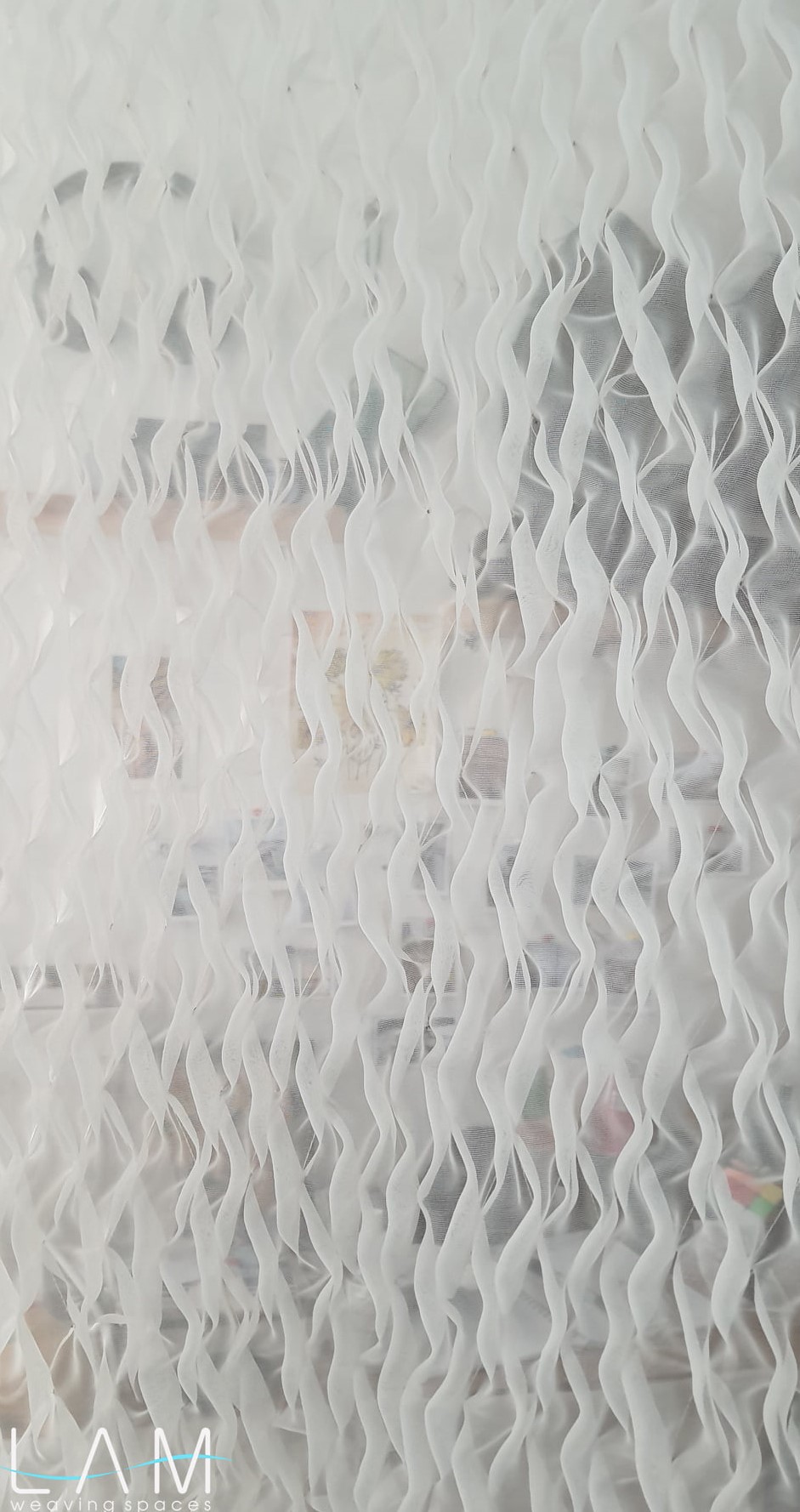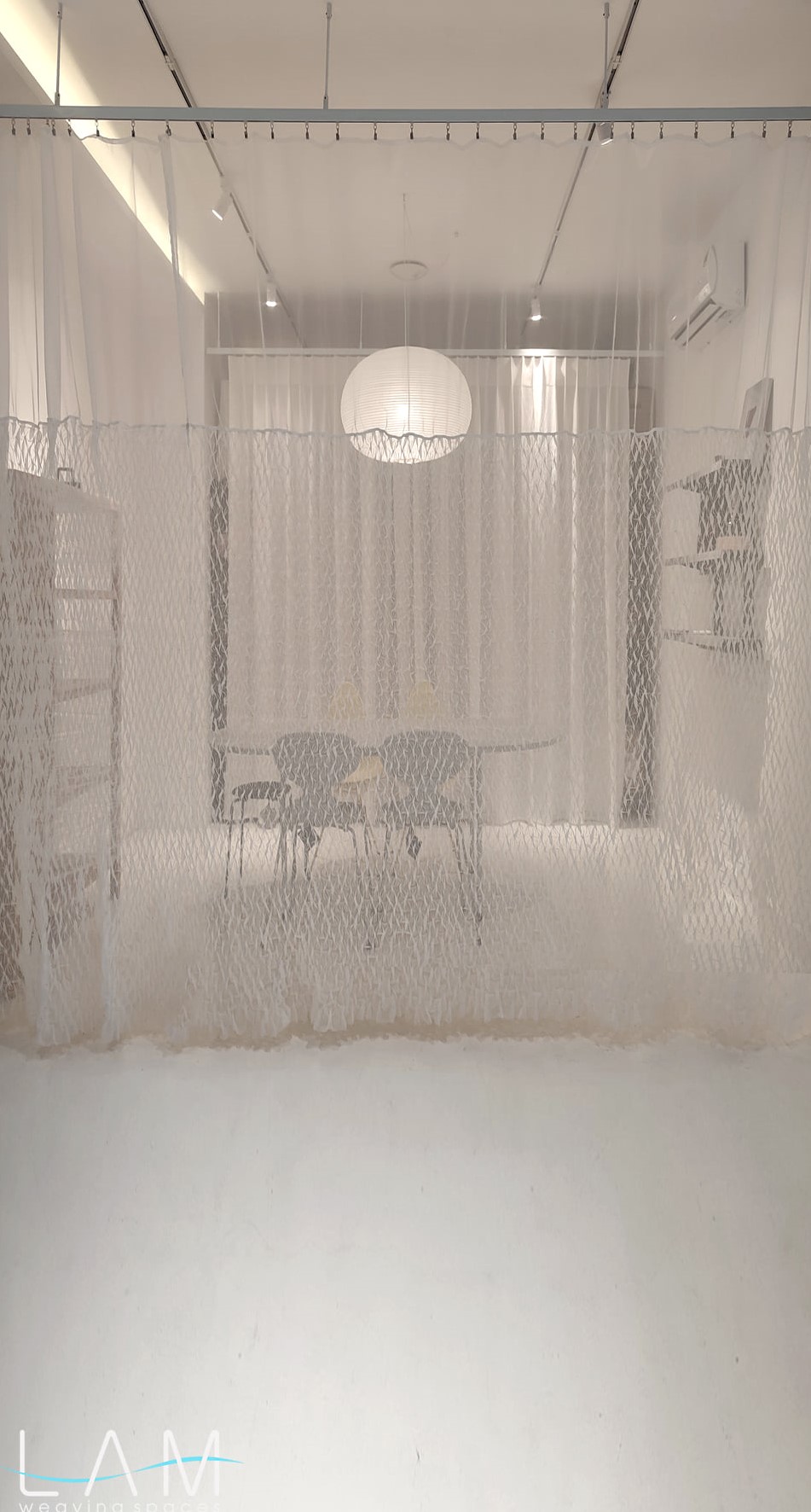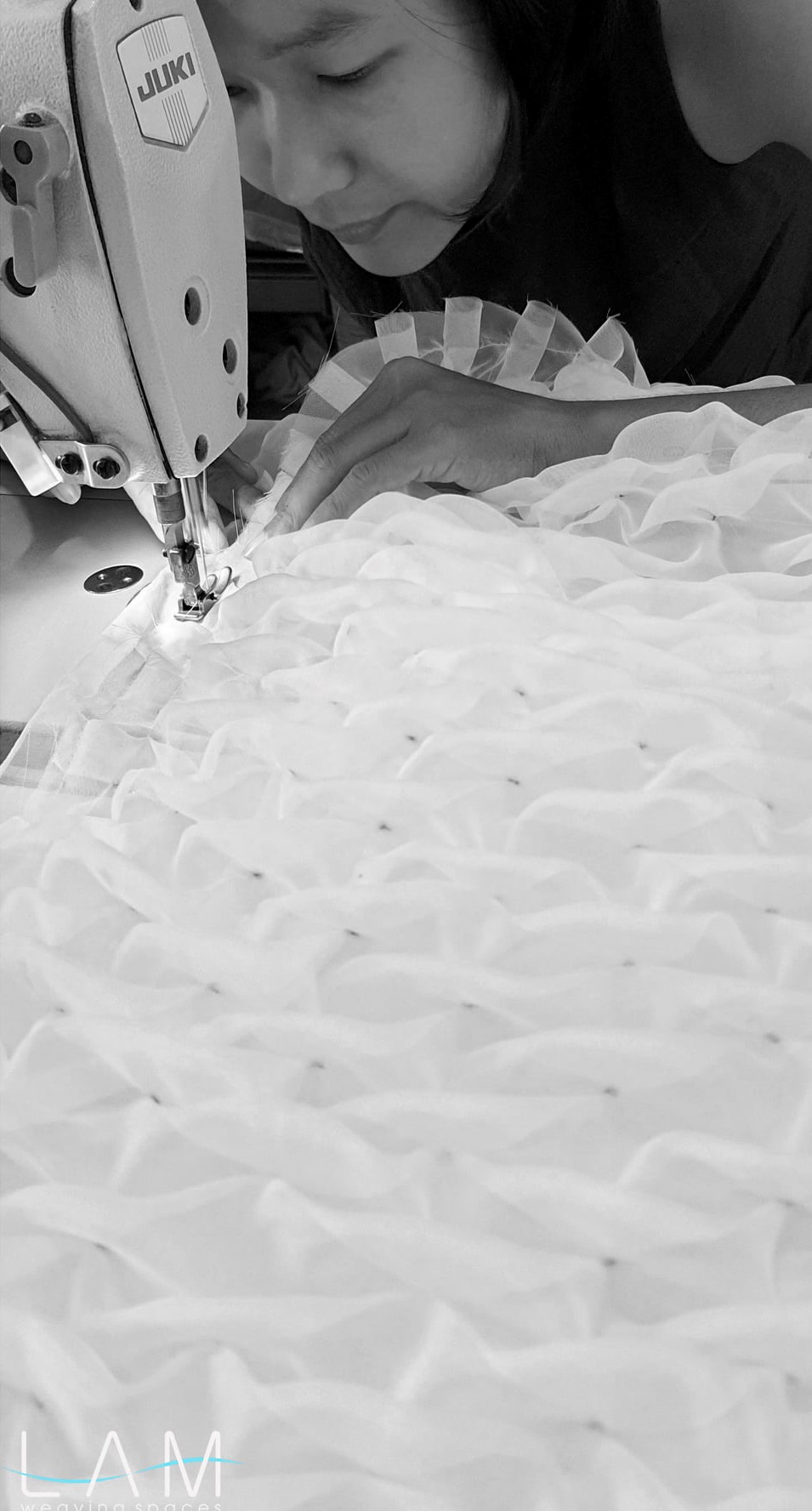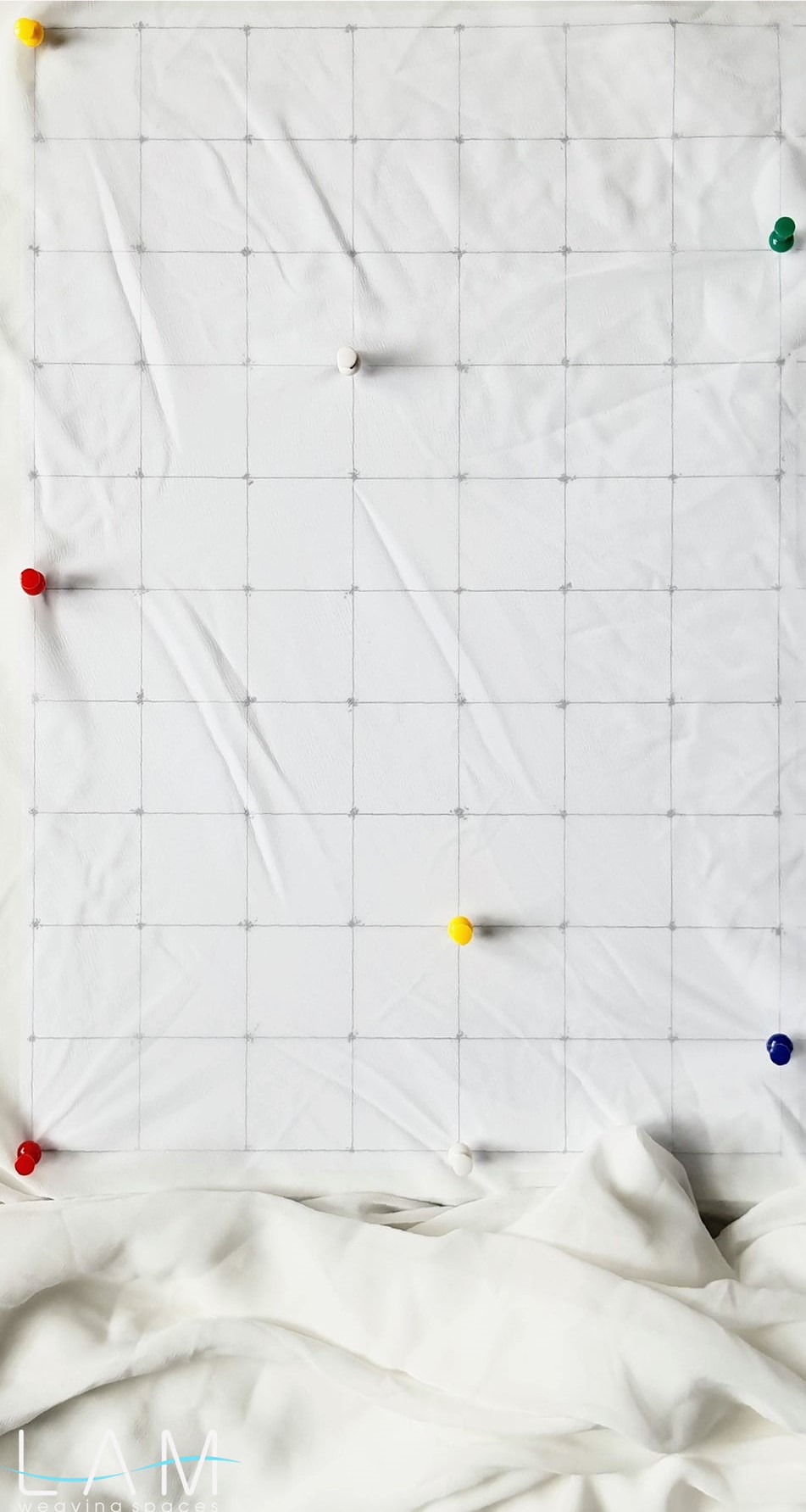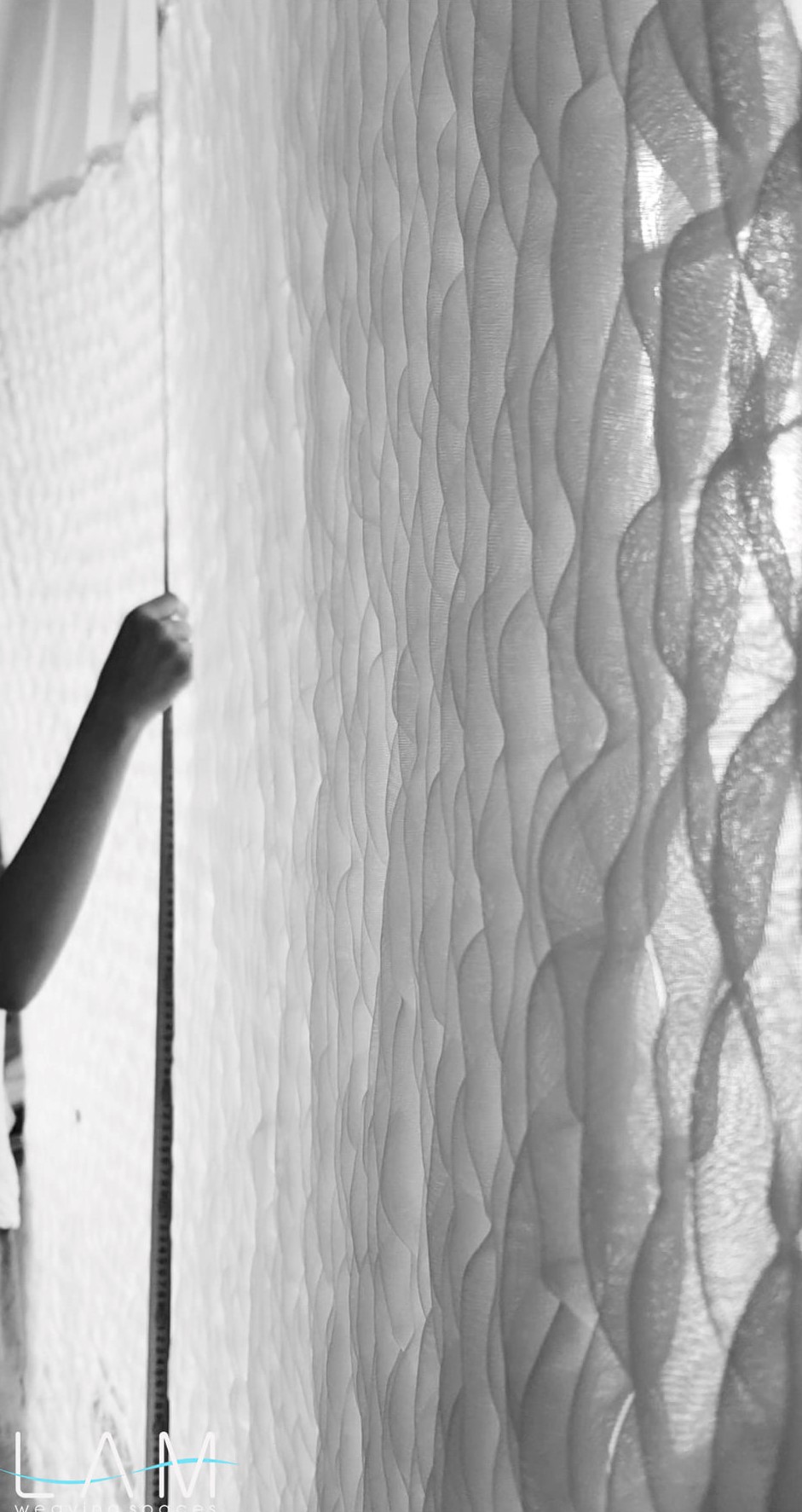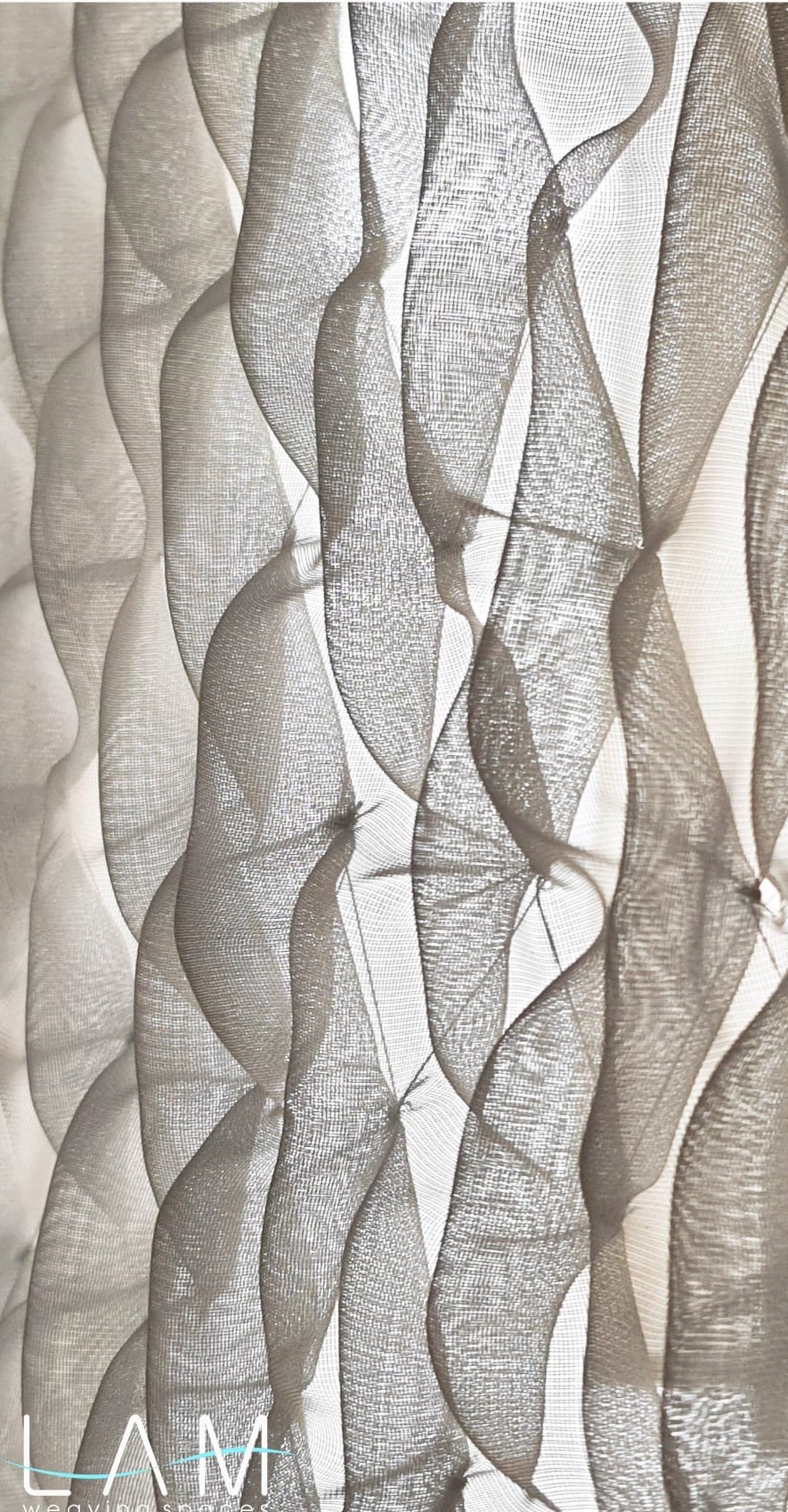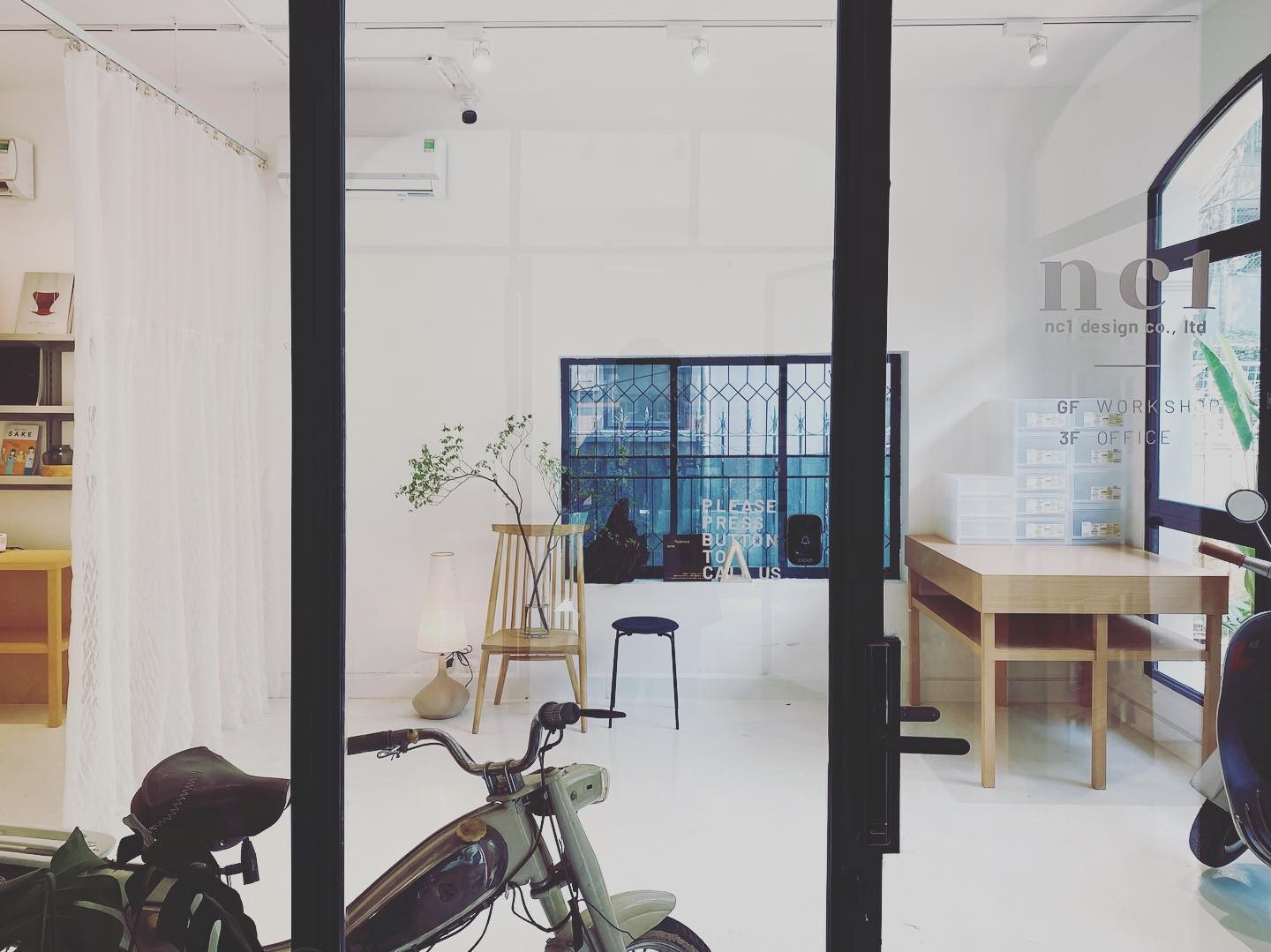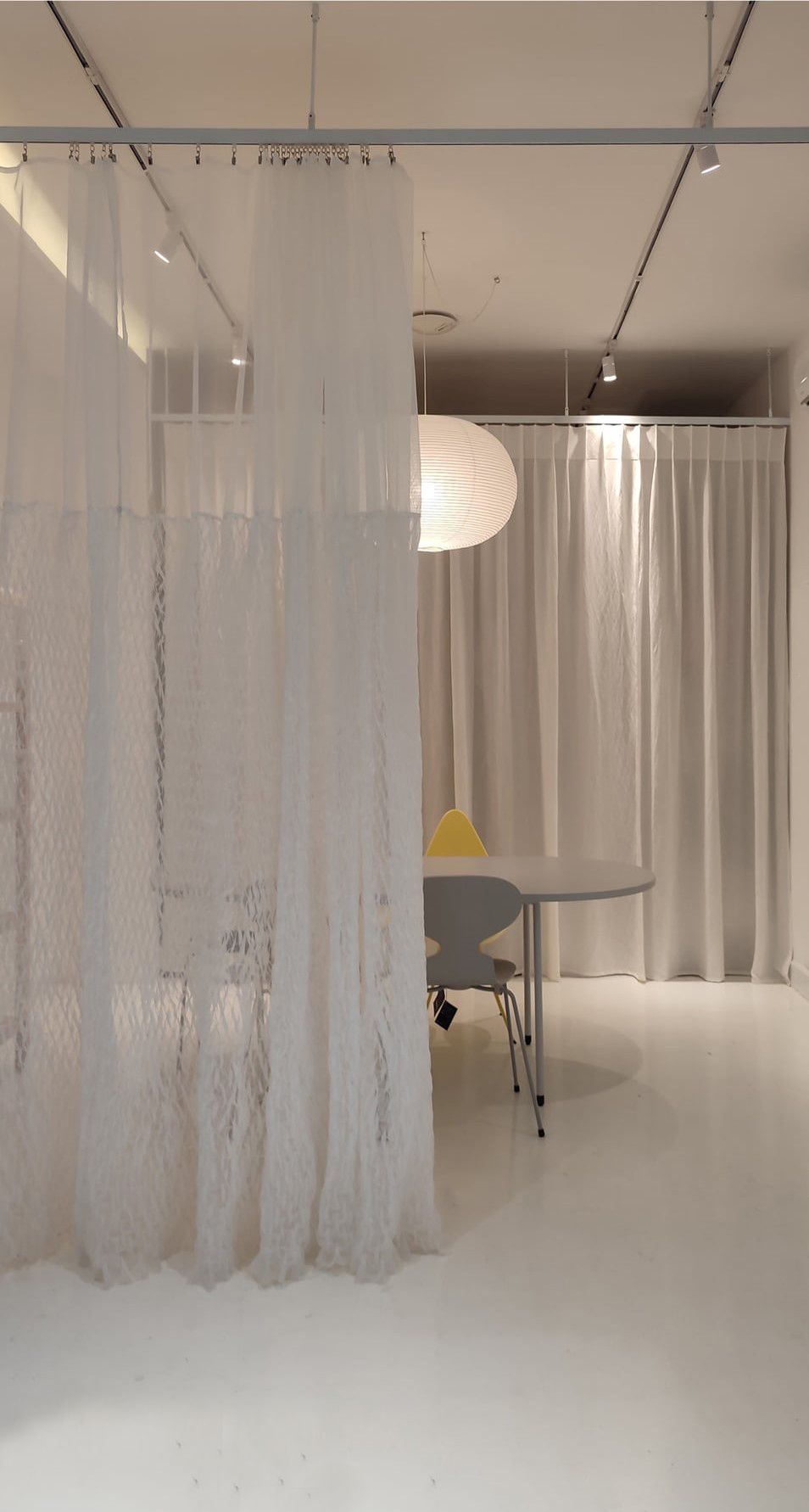

The curtain system was developed using the smocking technique for application in an interior design office environment, where flexibility was essential while maintaining the necessary level of privacy. Sheer fabric combined with the distinctive gathering method of smocking created a layered translucency, allowing the curtain to function as a lightweight, movable partition that provided just enough enclosure for small meeting rooms.
At a larger scale, controlling elasticity, surface tension, edge finishing, hems, stitching details, and panel joints became far more complex than with flat surfaces. Smocking on wide sheer panels produced a rich visual experience. Depending on lighting direction, backlighting, or viewing angle, the curtain revealed varying tones and depths. The transparency of the voile, together with the dimensional knots formed by the smocking, transformed the surface into something structured and dynamic rather than simply flat. While smocking is commonly used in fashion, its application in architecture and interior design requires careful consideration of spatial effects and scale.