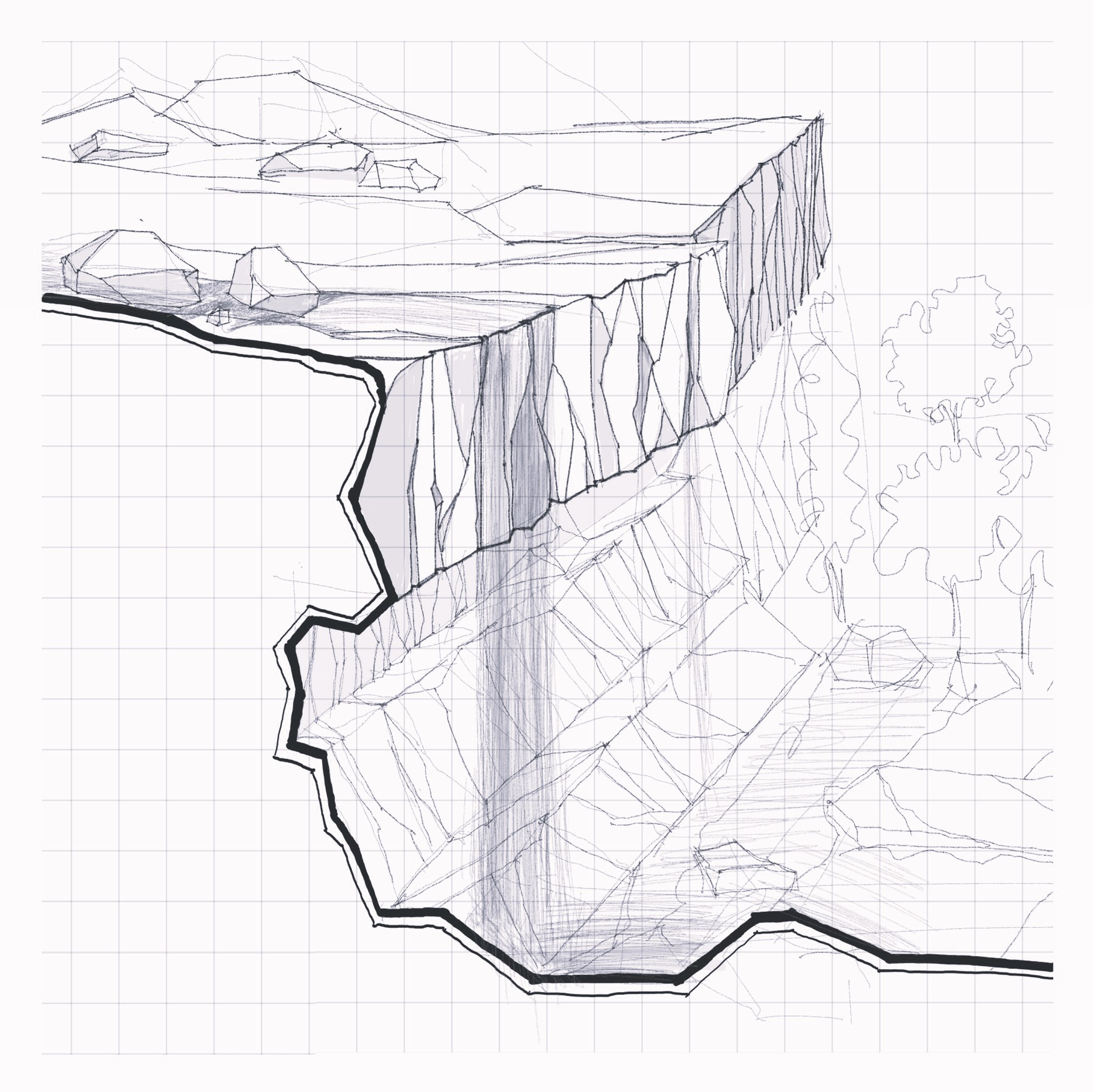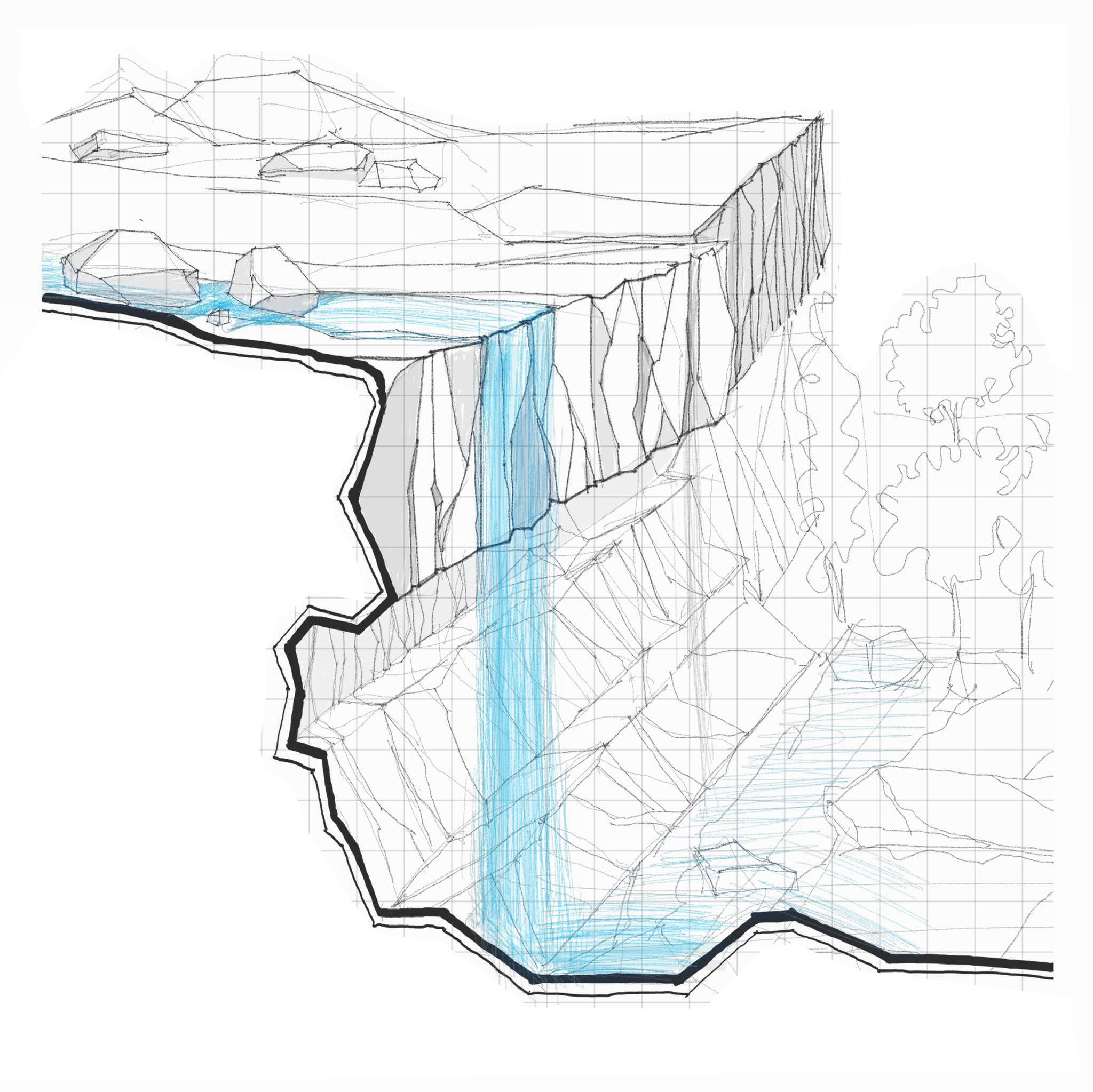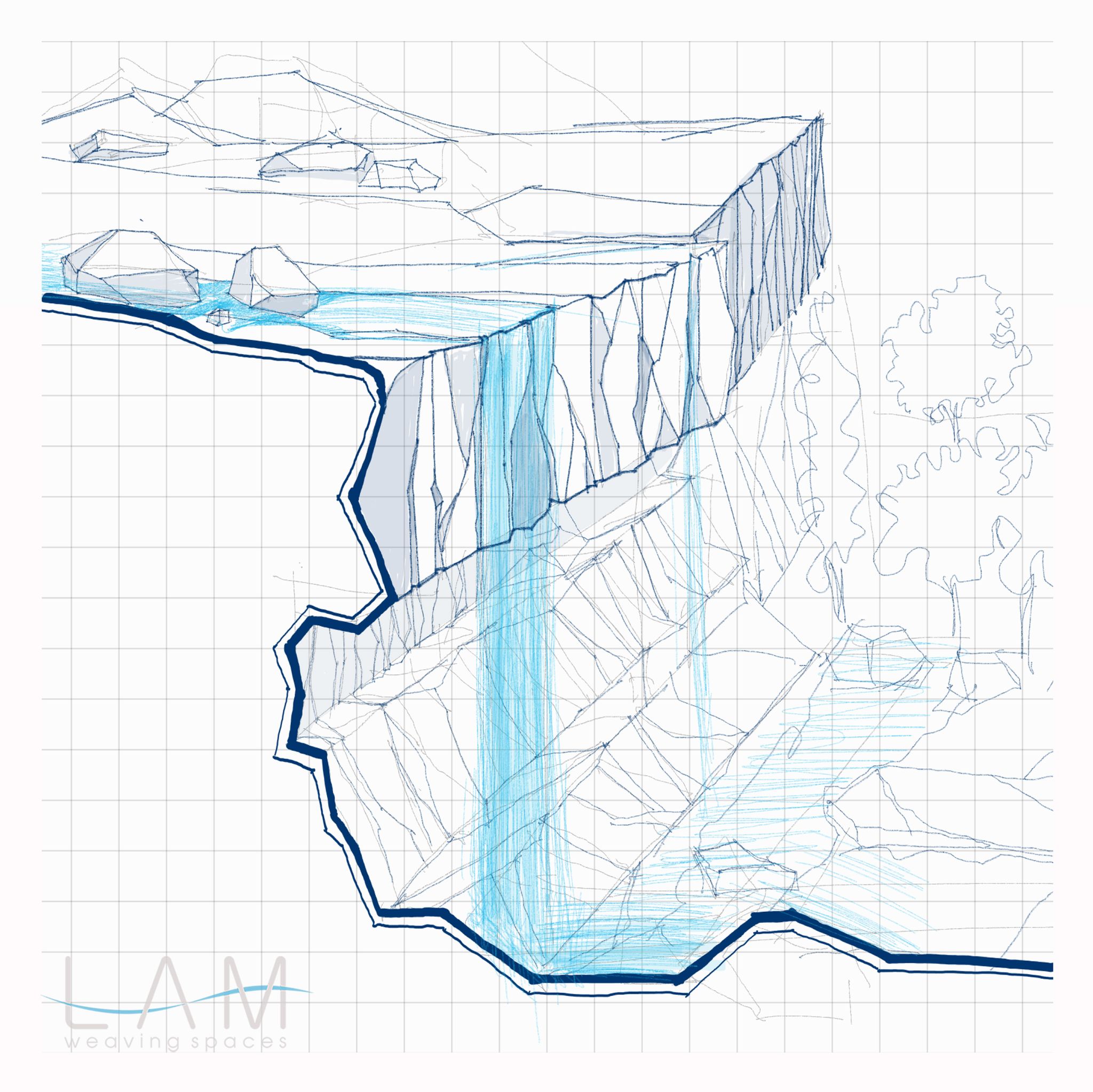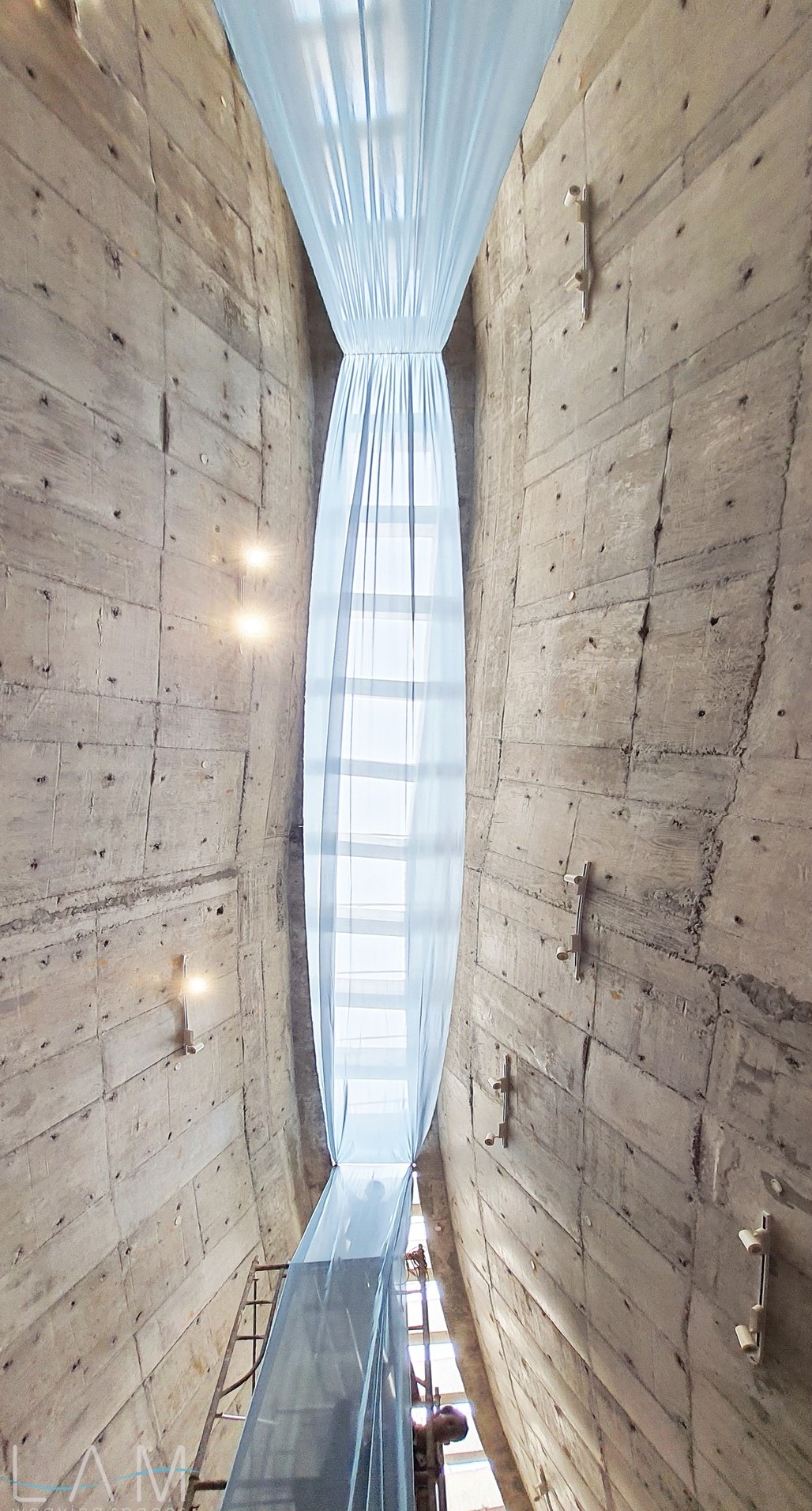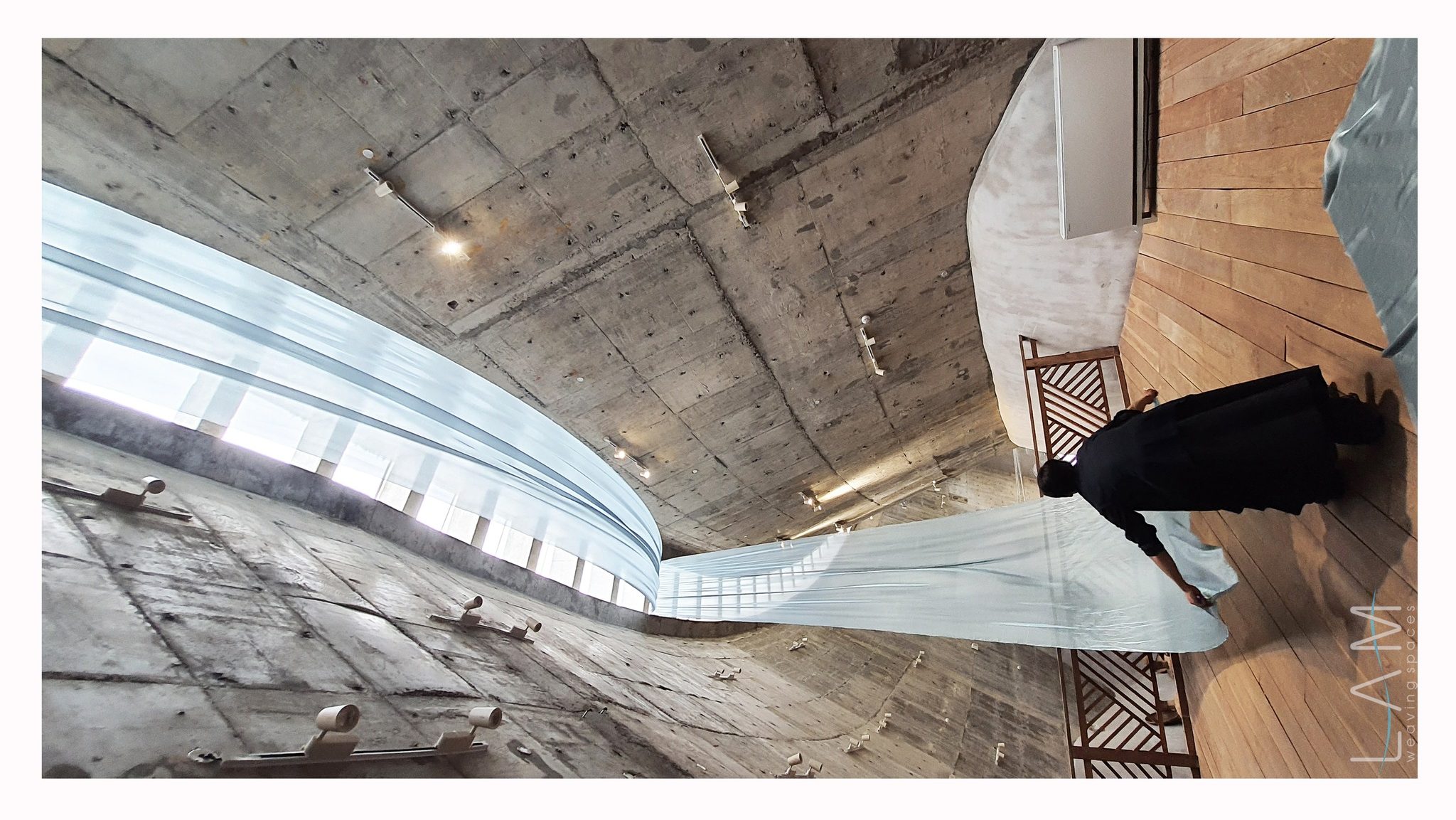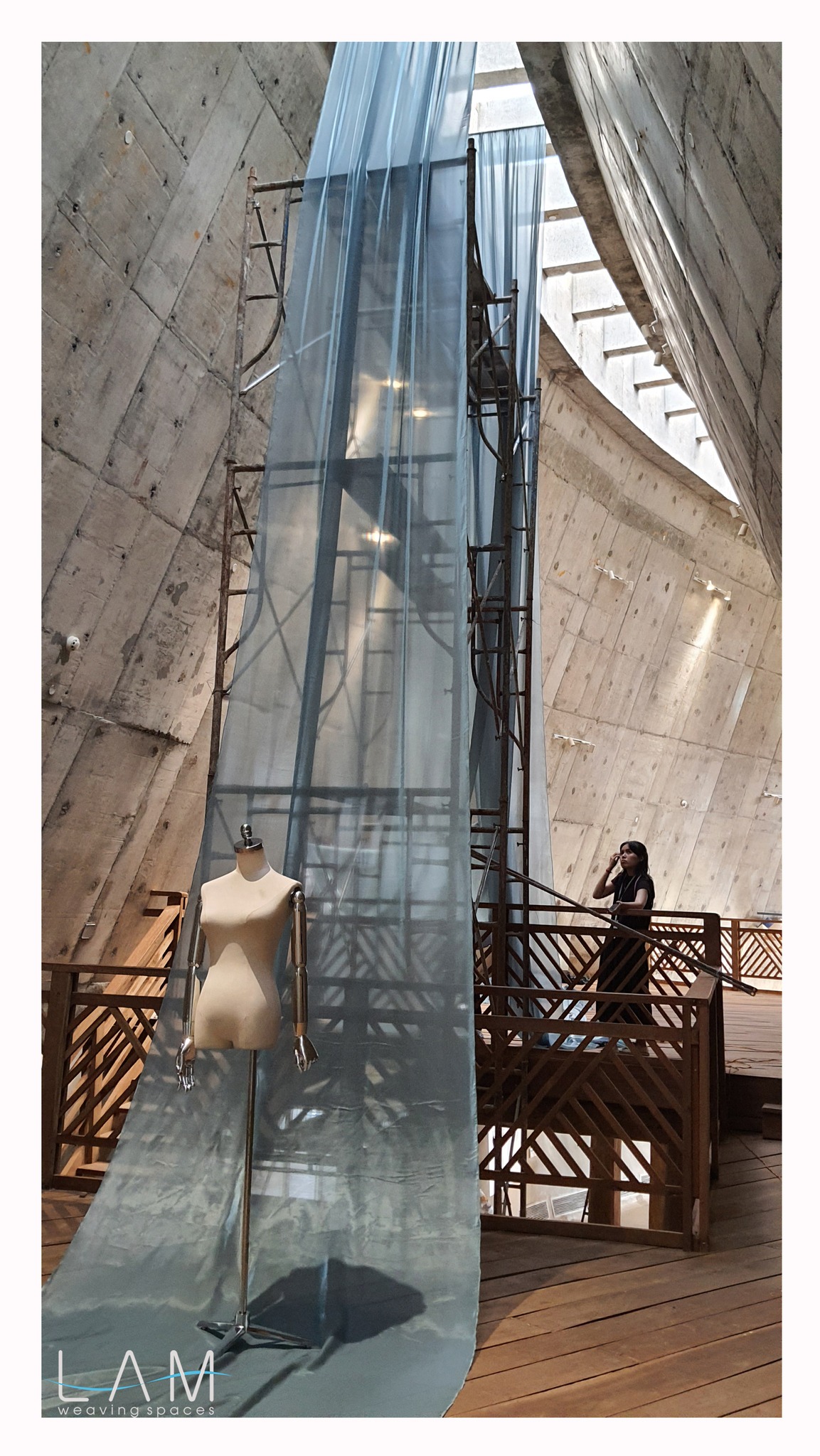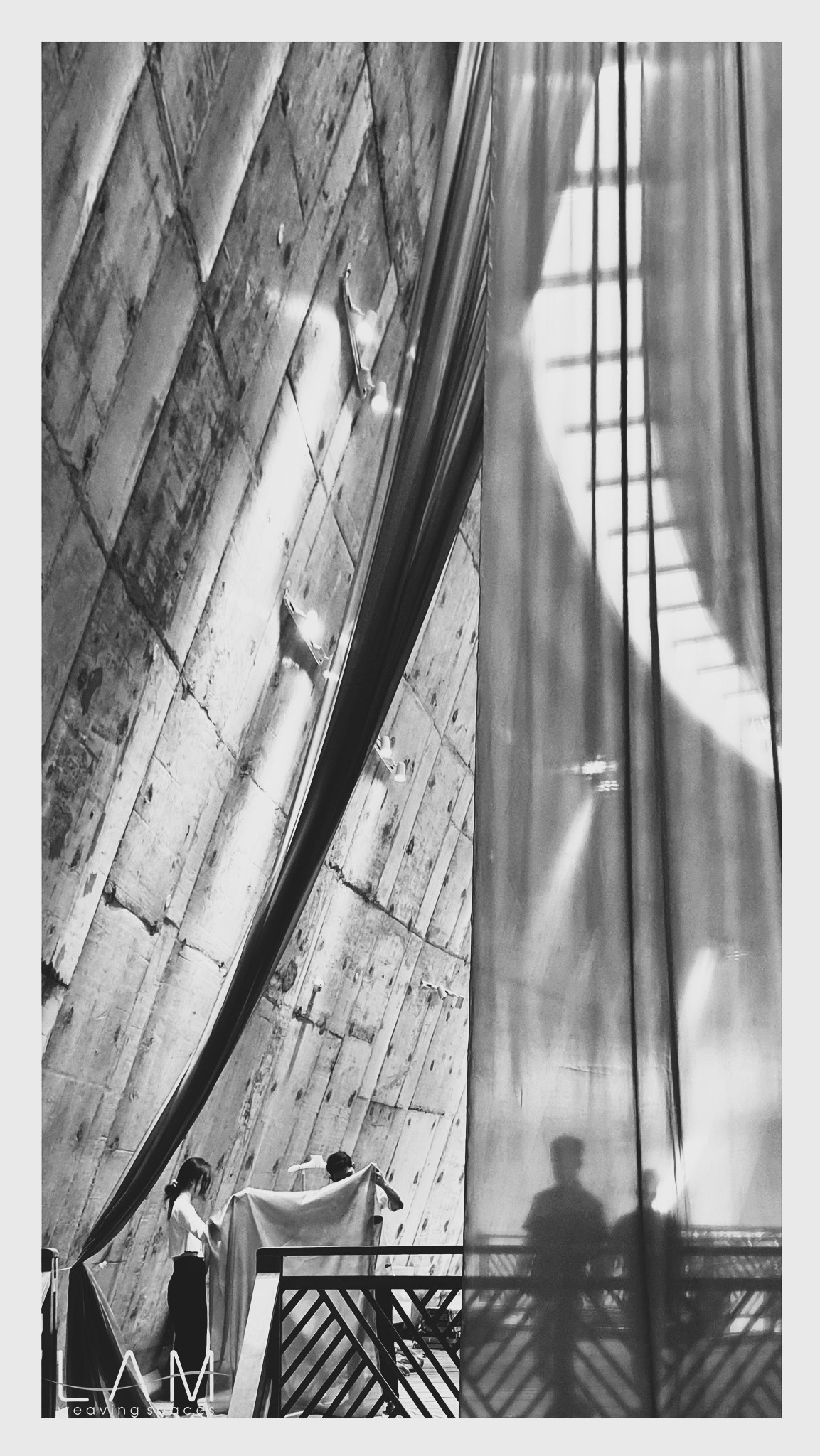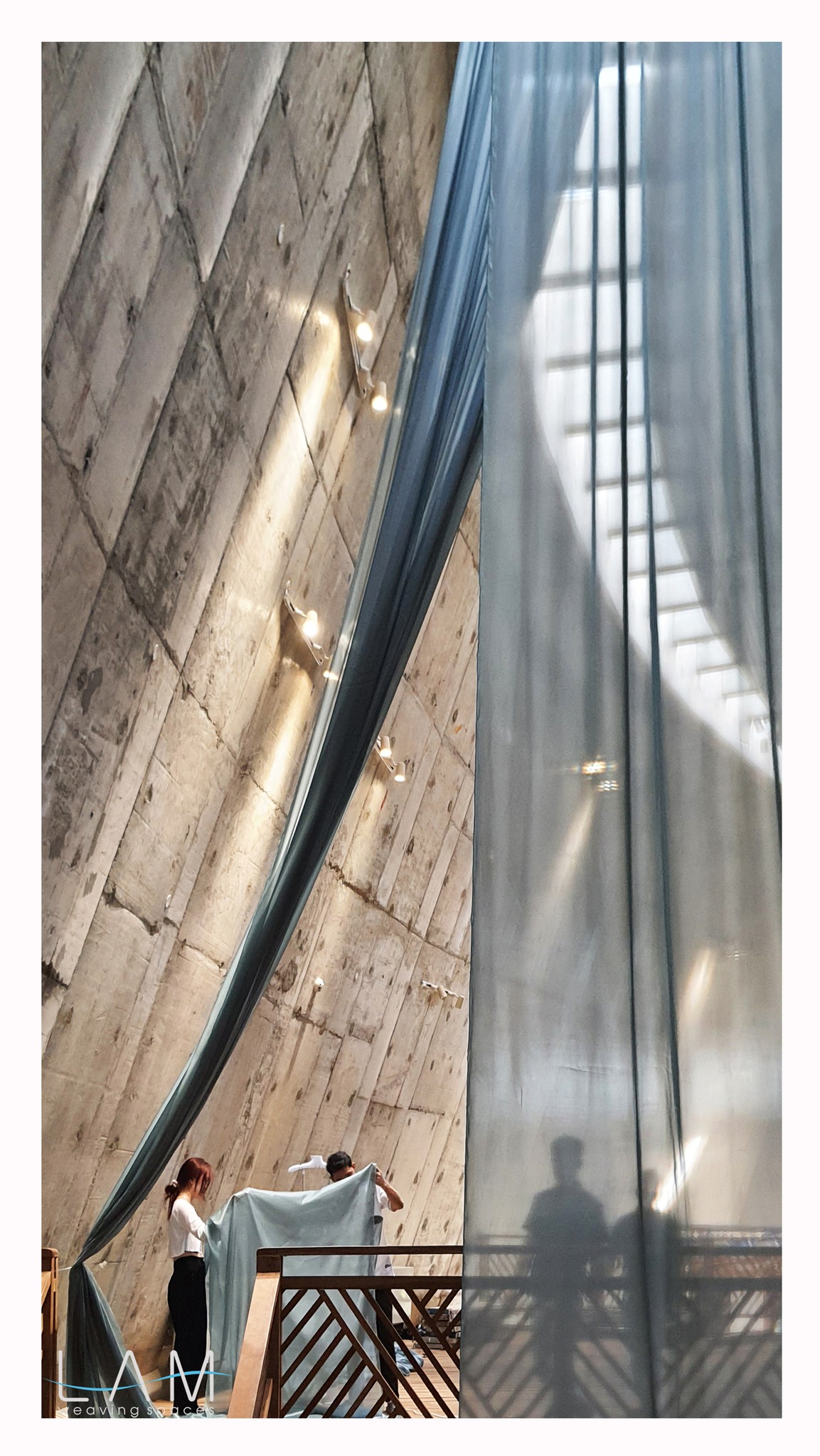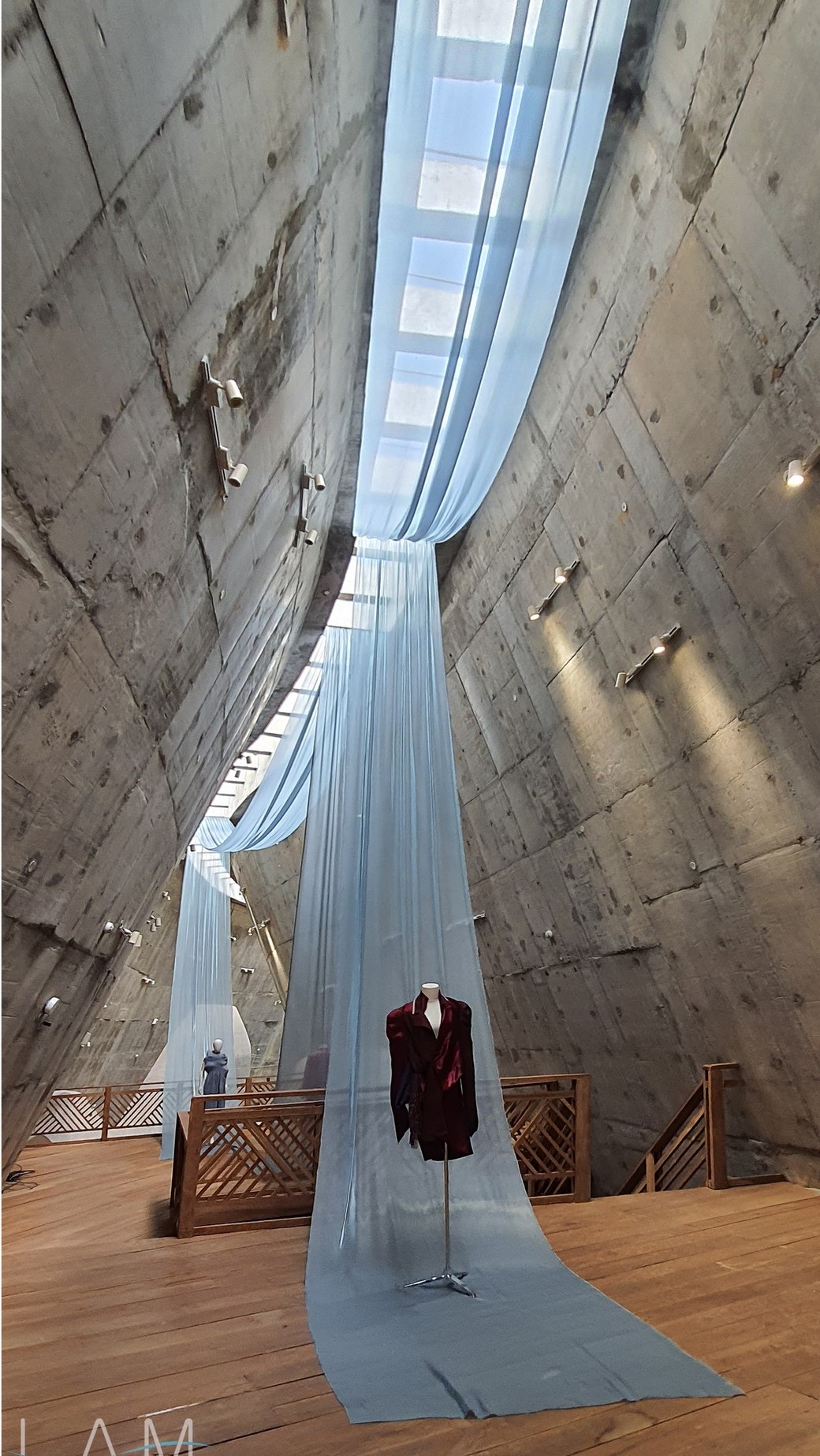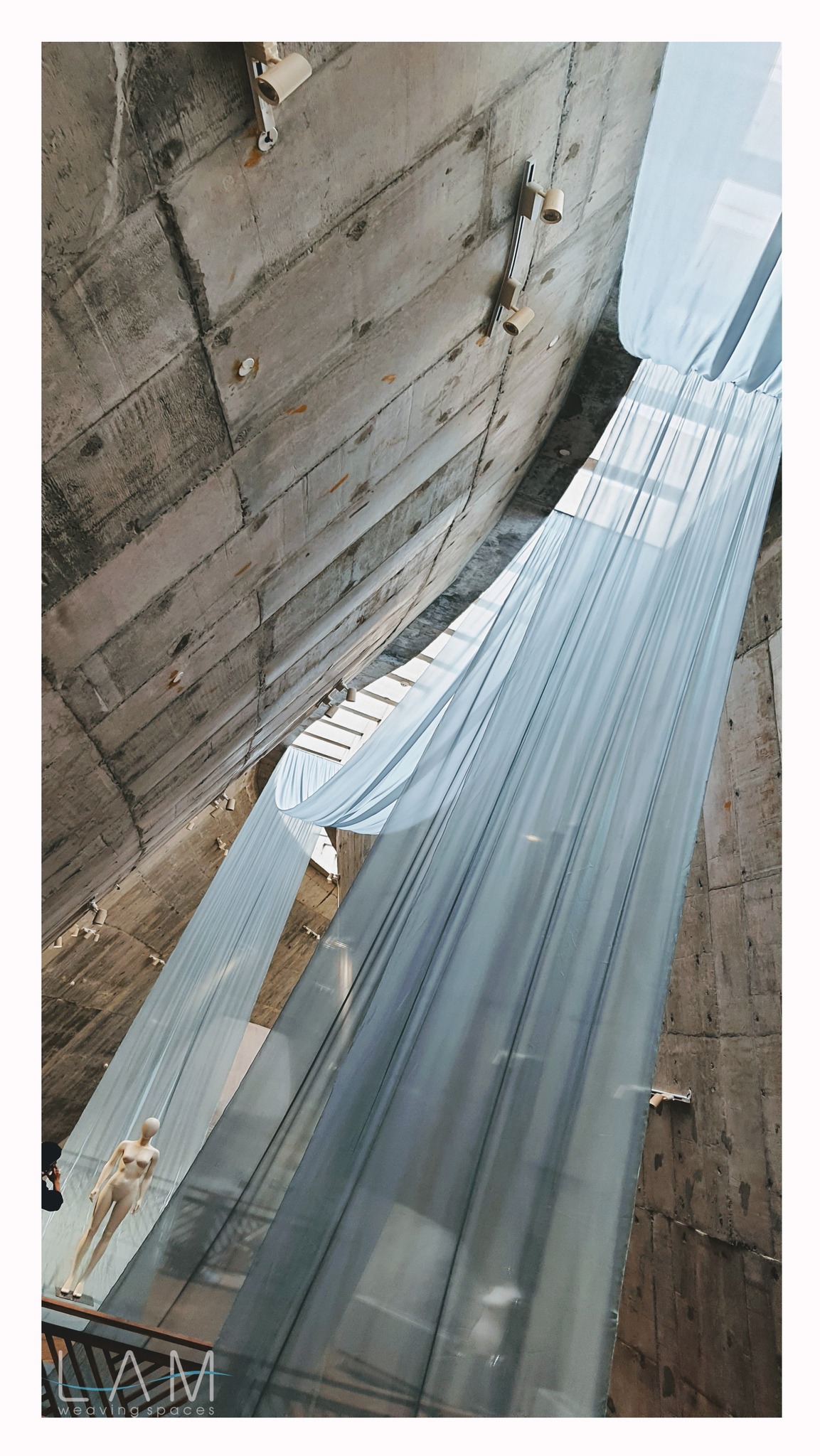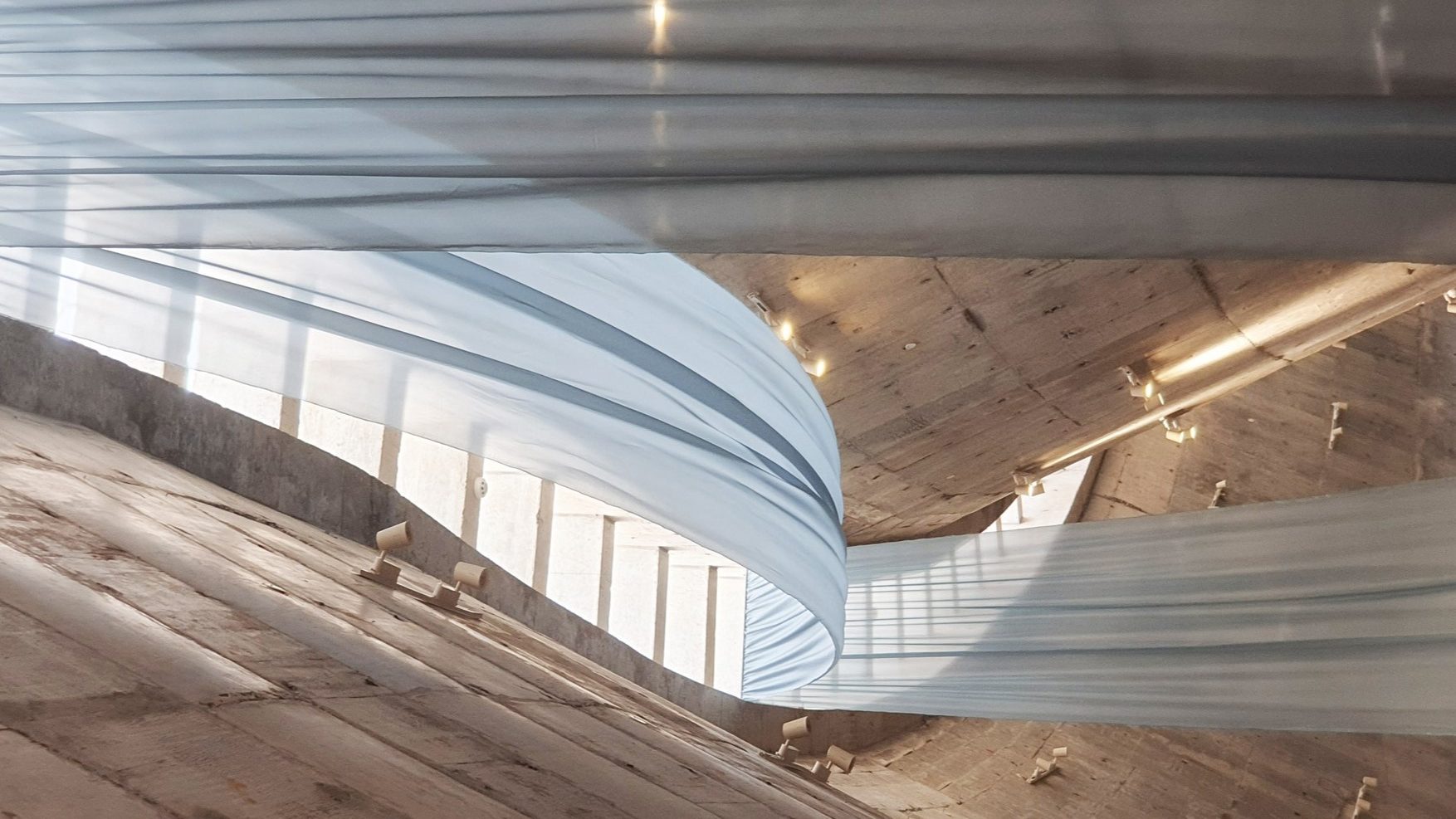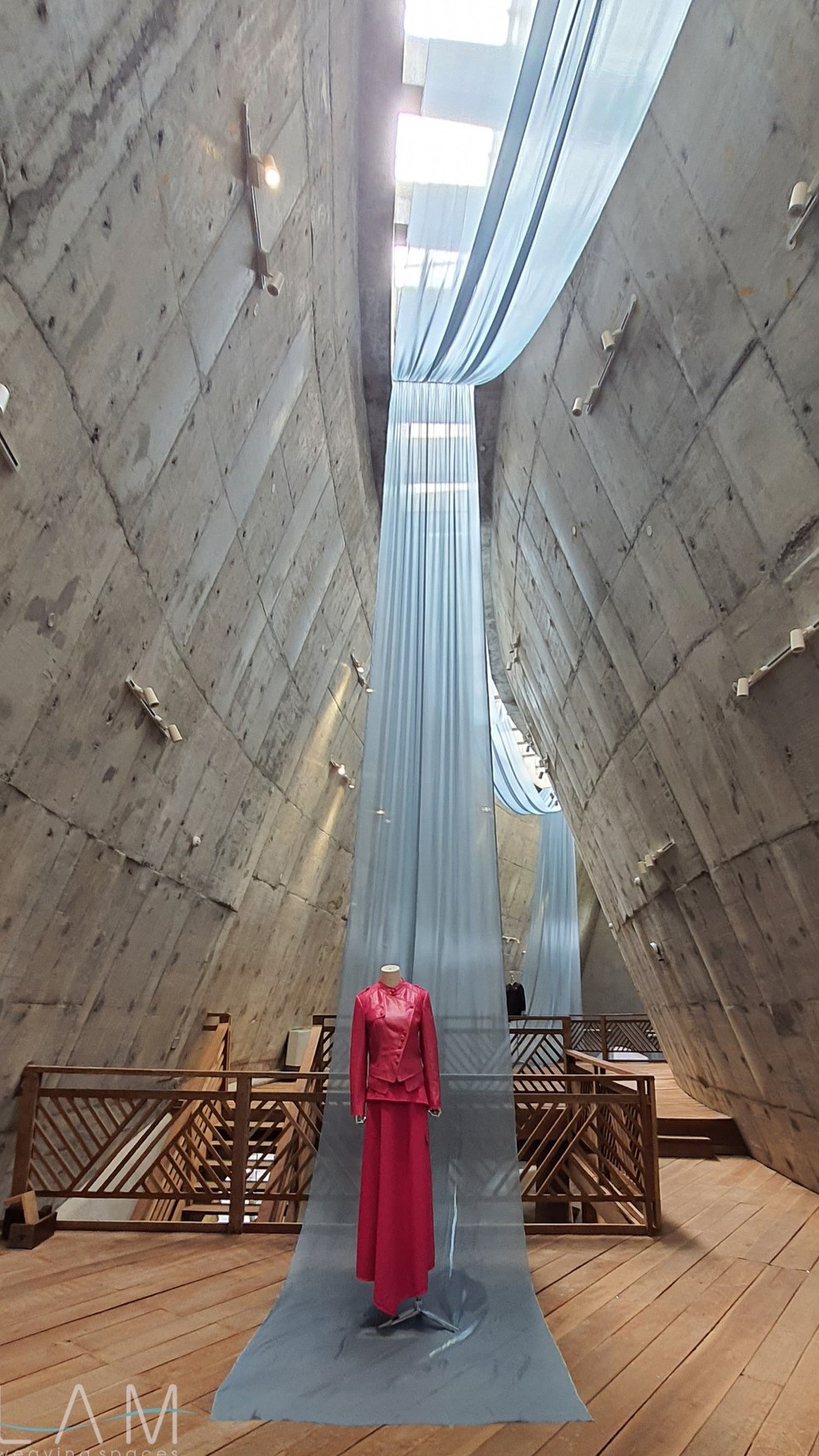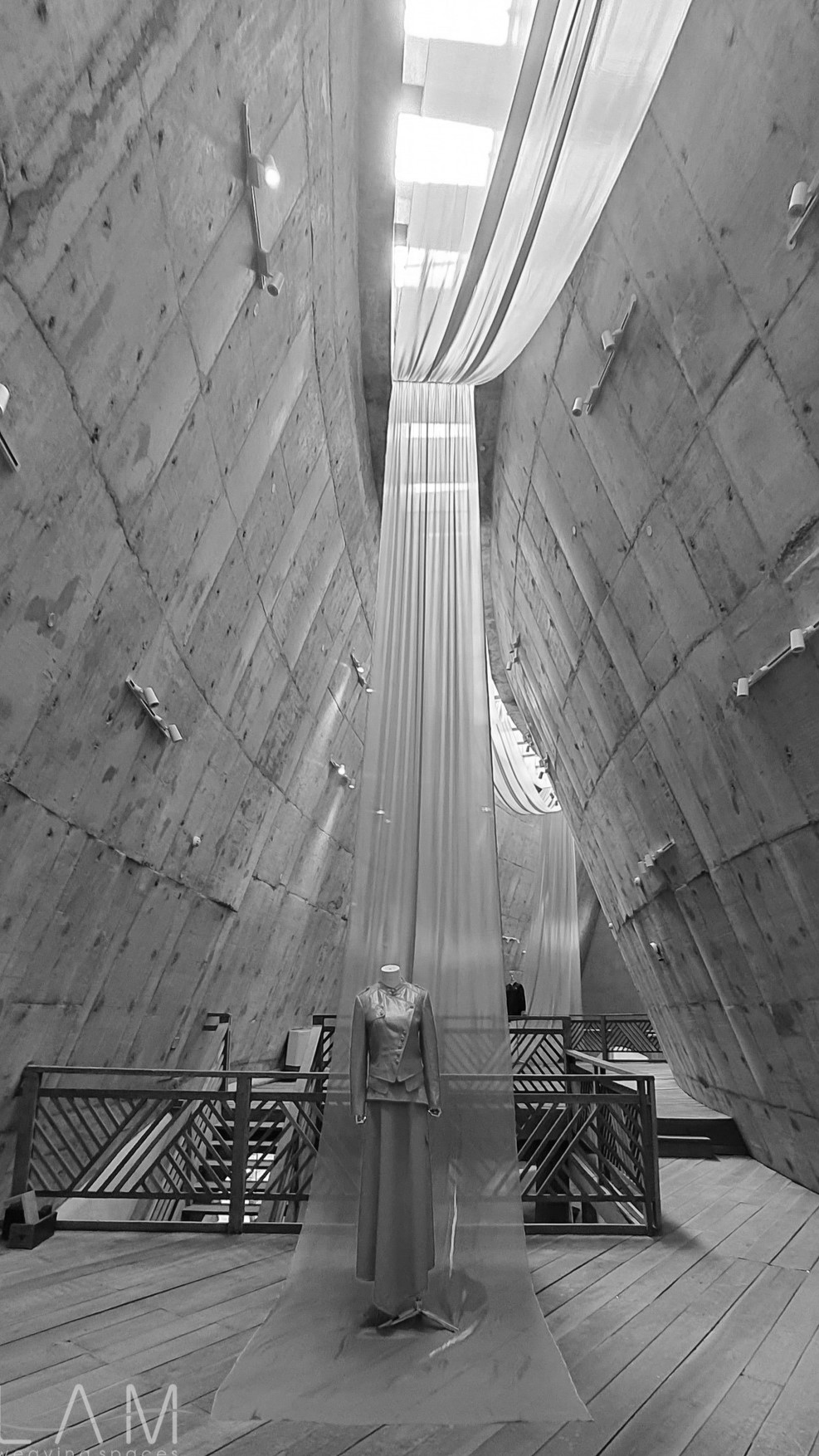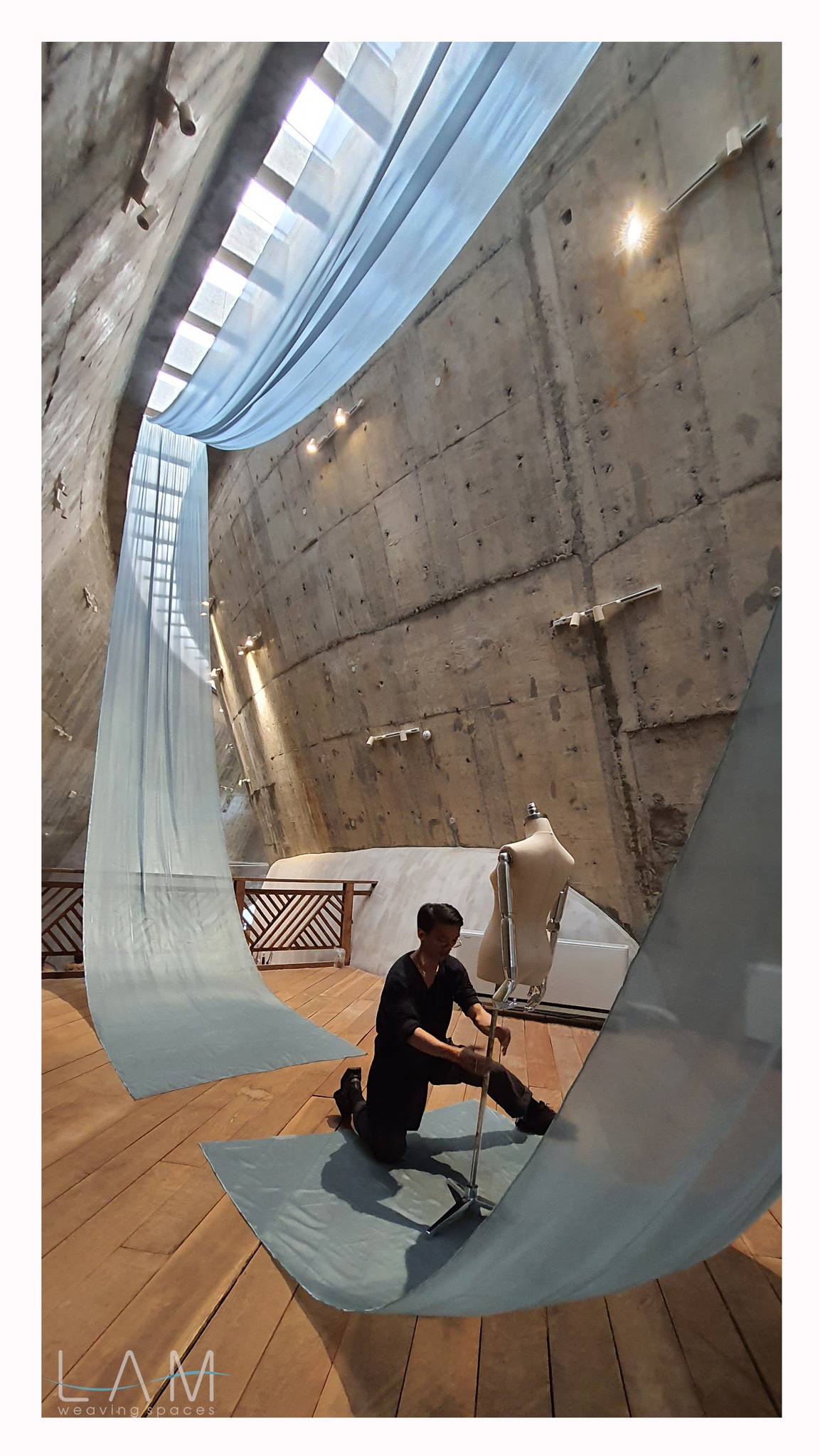

Tay Nguyen was known for its waterfalls, where water flowed from high rock gaps and created powerful landscapes. Against the strong presence of the mountains and forests, the water could appear gentle or intense depending on the season, forming a contrast that remained balanced and harmonious. The existing exhibition space in the museum suggested a similar idea: two slanted concrete walls curved along the space, while a narrow skylight ran along the roof ridge for the full length of the building.
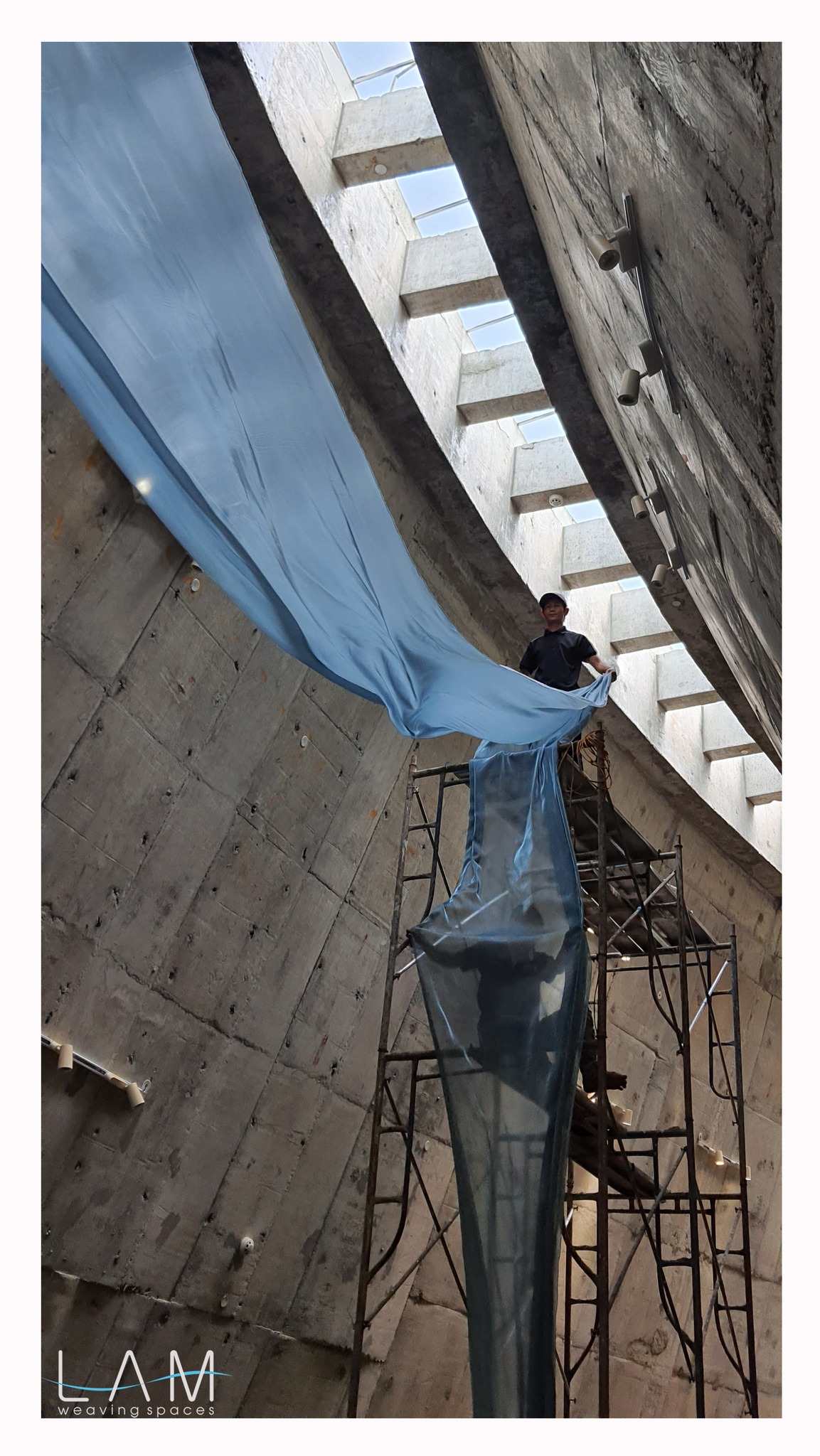
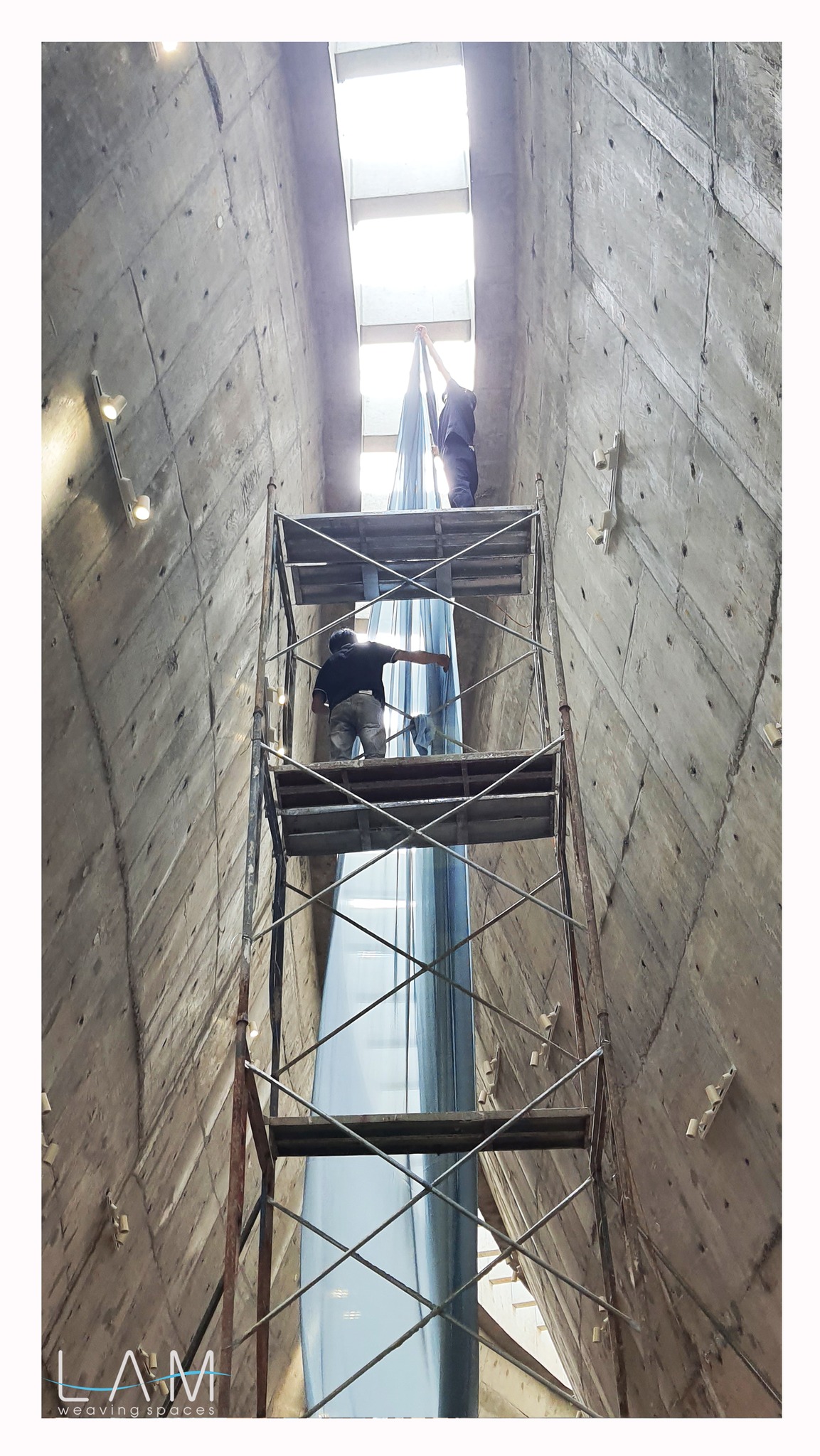
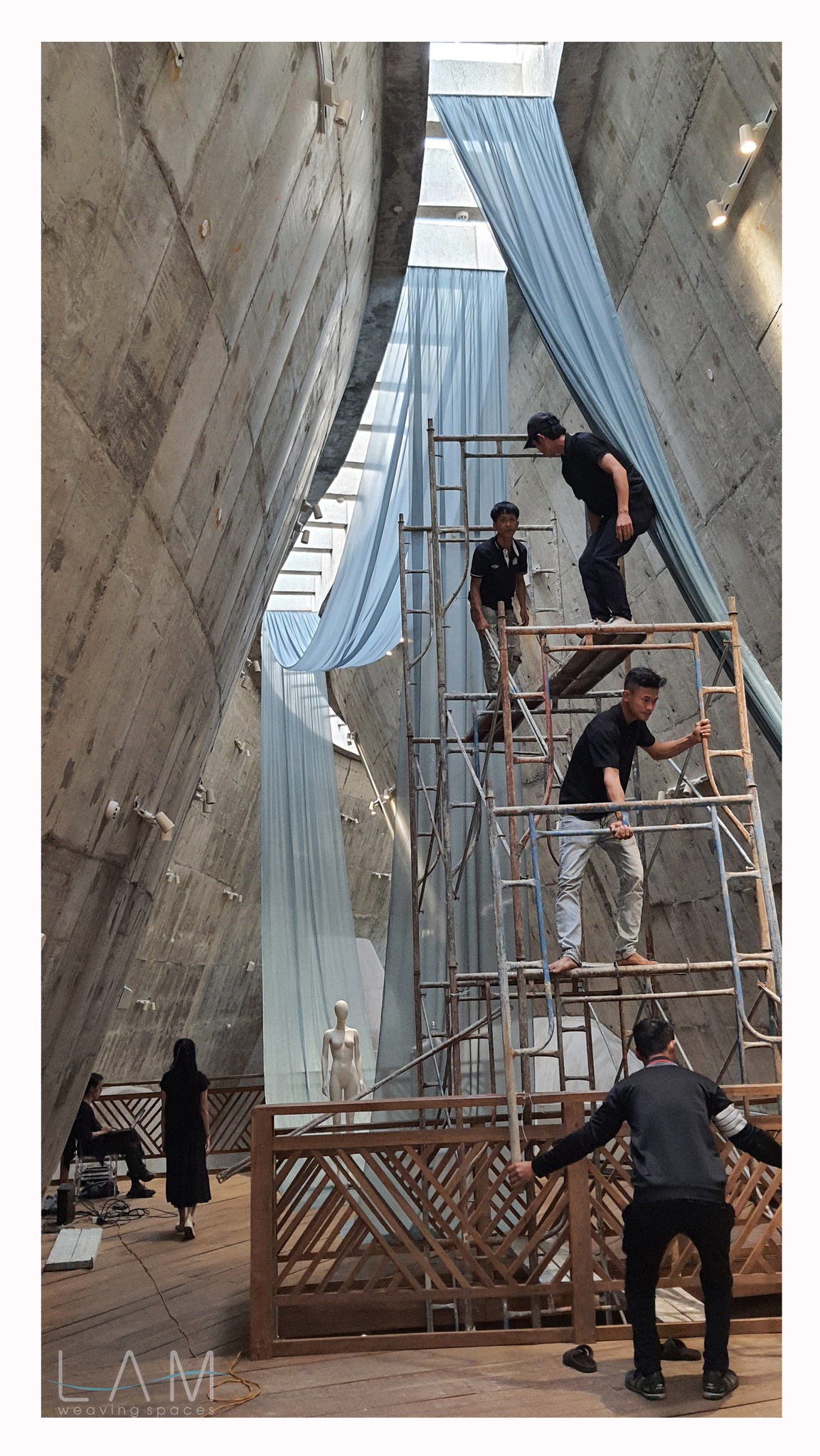
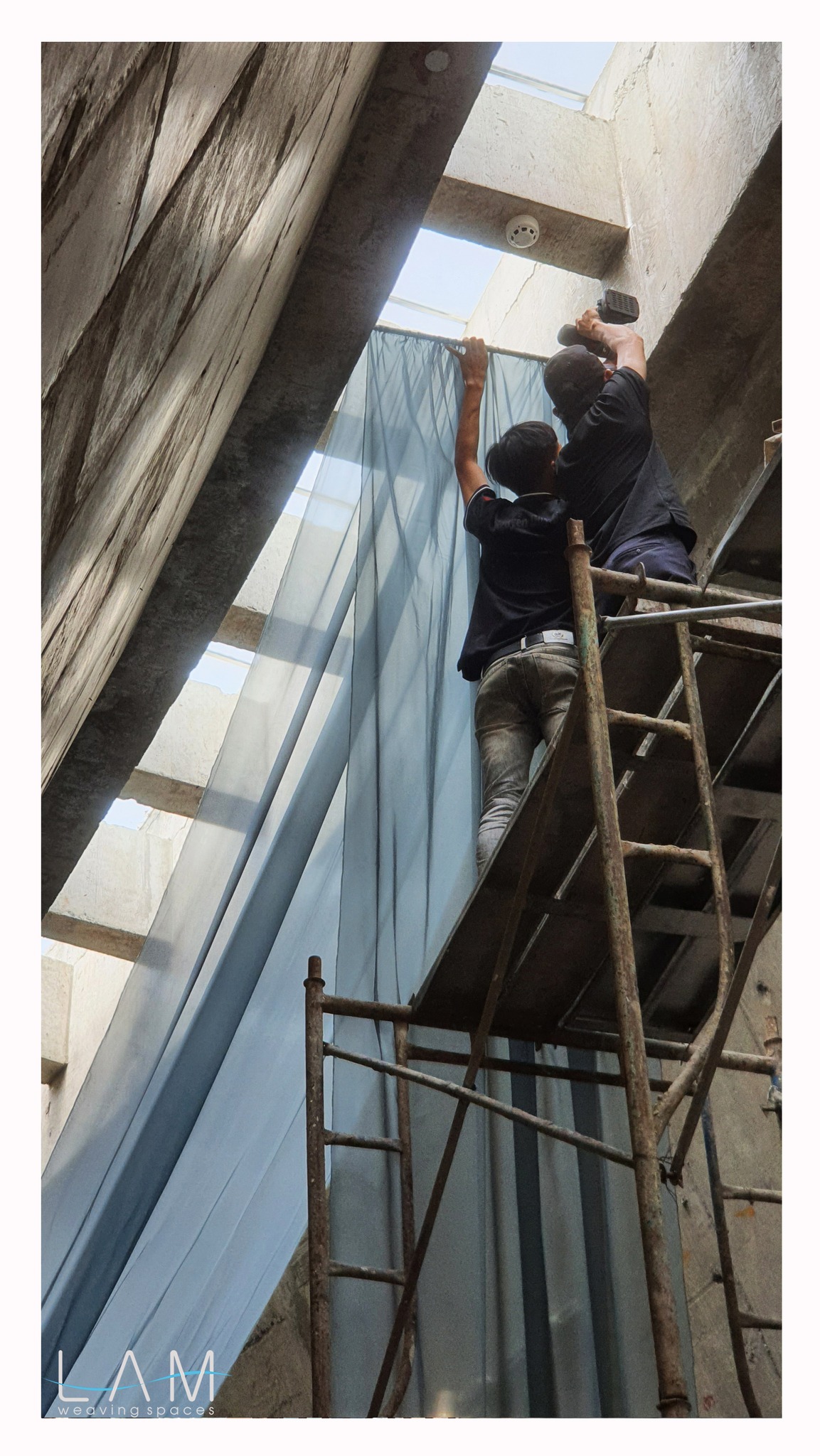
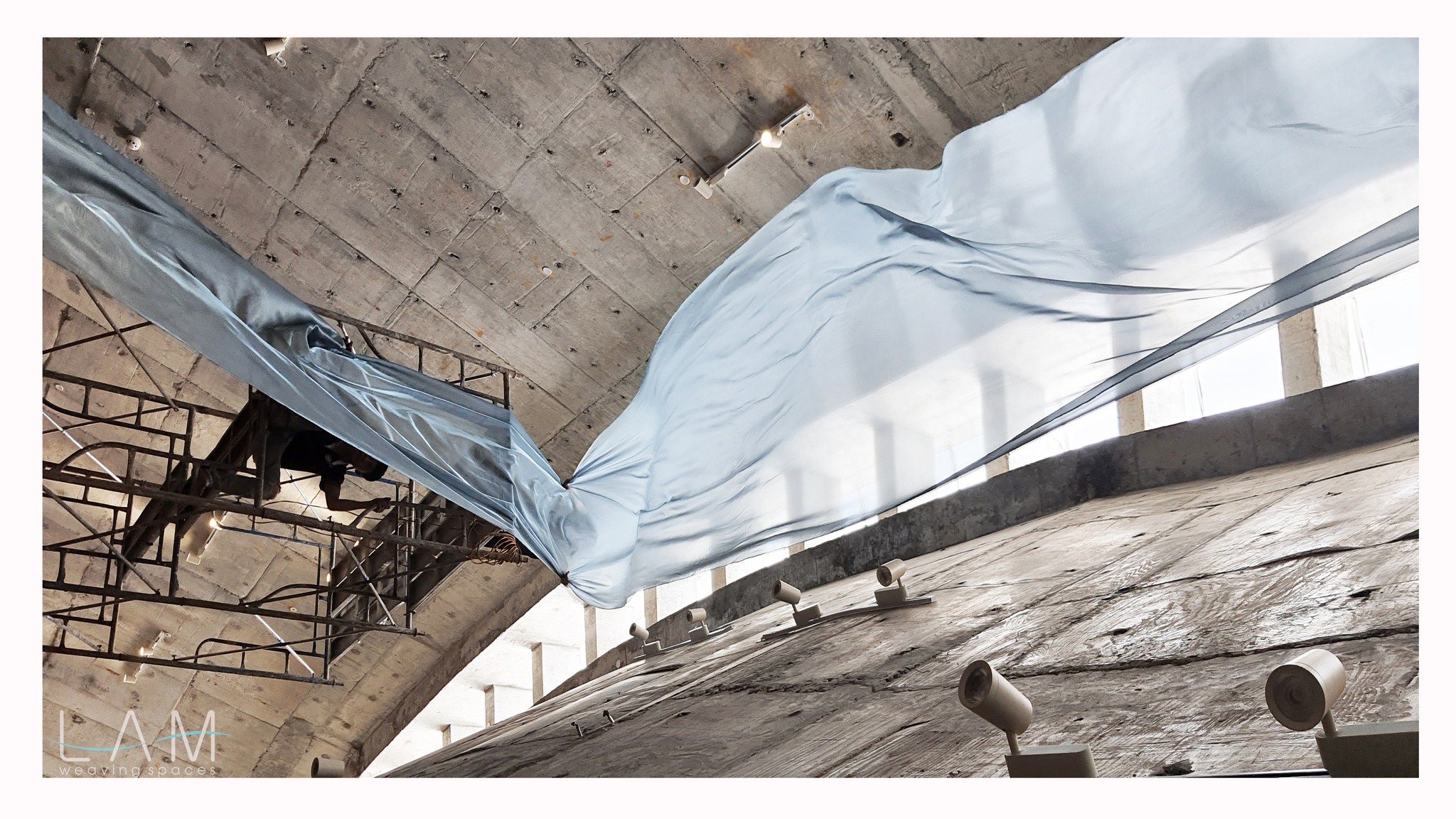
The concept came from the image of a soft stream of water moving along the skylight and falling down like the waterfalls of Tay Nguyen. The design language remained simple and clear, focusing mainly on the choice of material and color to achieve the intended effect. Silk voile was selected for its soft, thin quality and slight shine, which allowed it to interact well with the natural light from the skylight and create a sense of gentle movement in the space. The installation process at height also became an interesting part of the project. Long pieces of fabric hung from tall scaffolding and moved as workers pulled them into position, allowing LAM to adjust the real proportions directly on site. For LAM, the construction process was always an important part of the design, not only to complete the work but also to offer observations and ideas for future projects.